

Trying to remove moving objects from video is one of the most common cleanup tasks in modern editing. A great clip can instantly look messy when random people, passing cars, bikes, pets, or background distractions move through the frame. Whether you are editing travel footage, product demos, real estate walkthroughs, tutorials, or social media content, learning how to remove moving objects from video can make your final result look cleaner and more professional.
Today, creators have several ways to remove unwanted objects from video, from AI desktop software and online tools to mobile apps and pro editing programs. Some methods are quick but limited, while others offer better quality and more control. In this guide, you will learn the best ways to remove moving objects from video, which tools are worth using, and why Wondershare UniConverter is a practical choice for creators who want cleanup, enhancement, and export tools in one workflow.

In this Article
- Part 1: Why Moving Objects Ruin an Otherwise Good Video
- Part 2: Best Methods to Remove Moving Objects from Video
- Part 3: Which Tool Is Best for Removing Moving Objects from Video?
- Part 4: Why UniConverter Is a Practical Choice for This Keyword
- Part 5: How to Remove Moving Objects from Video with UniConverter
- Part 6: Tips for Better Moving Object Removal Results
- Conclusion
- FAQs
Part 1: Why Moving Objects Ruin an Otherwise Good Video
Moving distractions pull attention away faster than almost any other visual element in a shot. A static object in the background may go unnoticed, but a person walking across the frame or a car passing behind the subject usually catches the viewer's eye immediately. That is exactly why so many users search for ways to remove moving objects from video before publishing or sharing content.
In travel videos, random tourists can ruin what would otherwise be a clean landscape shot. In real estate footage, passing cars or people can make a property feel less premium and distract viewers from the space itself. In product videos, background movement can weaken the polished, controlled feeling that brands want to create. In tutorials and professional presentations, an unexpected moving object in the frame can make the content look less intentional and less trustworthy.
Another reason creators want to remove people from video or erase moving object from video footage is composition. Good composition guides the eye toward the subject. Unwanted background motion interrupts that flow. Even if the lighting, framing, and color grading are strong, visual clutter in motion can make the clip feel amateur.
Moving distractions also affect storytelling. If your video is meant to feel calm, premium, cinematic, or emotionally focused, random movement in the background competes with that mood. Audiences may not always explain why a clip feels “off,” but they often sense it. When you remove unwanted moving objects from video, the result usually feels cleaner, more professional, and easier to watch.
This is especially important for creators working on:
- travel videos with strangers in the frame
- street footage with passing vehicles
- real estate videos needing a cleaner look
- social media videos with visual distractions
- product demos and brand videos
- tutorials, explainers, and classroom content
In short, moving objects ruin good footage because they steal attention, weaken composition, and make content look less polished. That is why learning how to remove moving objects from video is so valuable for both casual users and professional creators.
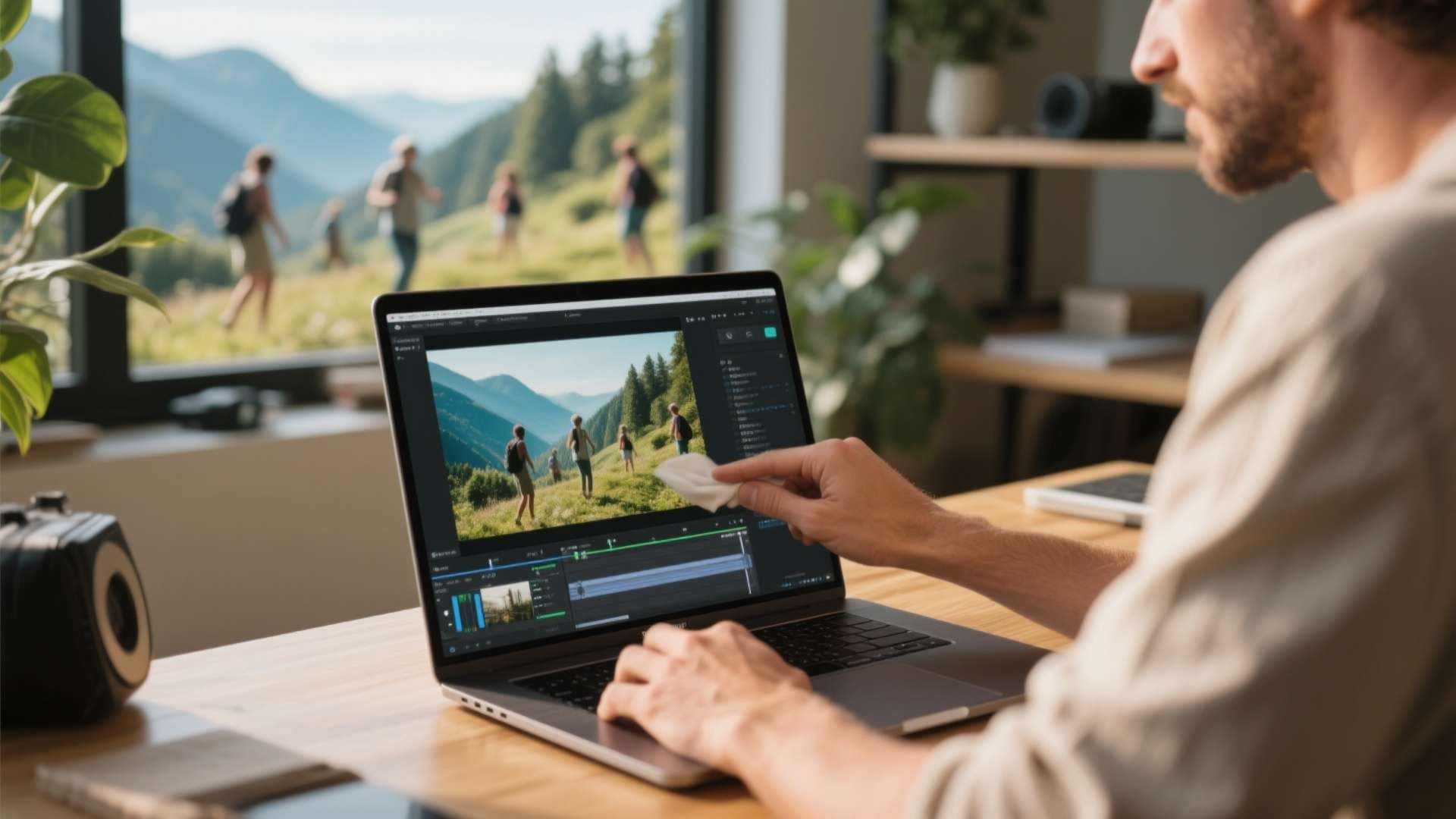
Part 2: Best Methods to Remove Moving Objects from Video
If you want to remove moving objects from video, the right method depends on your footage, editing skills, and quality expectations. Some tools are better for quick fixes, while others are designed for cleaner and more professional results. Below are the most practical options, along with recommended software for each workflow.
1. Use AI-Powered Desktop Software for Better Quality
For most creators, AI desktop software is the best option when you need to remove unwanted moving objects from video without sacrificing too much quality. Desktop tools usually handle larger files better, offer more stable performance, and give you more control over the final export.
Recommended tools:
- Wondershare UniConverter – best for users who want a simple all-in-one workflow with editing, enhancement, compression, and export in one place
- HitPaw VikPea / HitPaw Video Enhancer – useful for AI-based cleanup and post-removal enhancement
- Adobe Premiere Pro – suitable for advanced users who want more manual control with masking and tracking
- DaVinci Resolve – a strong option for more experienced editors who need detailed frame-level adjustments
This method works well for travel videos with strangers in the background, real estate clips with passing cars, product demos with distractions, and tutorial footage that needs a cleaner presentation. If your goal is to remove people from video while keeping the output polished, desktop software is usually the most reliable choice.
2. Use Online Tools for Quick, Lightweight Edits
Online tools are useful when you only need a fast fix and do not want to install software. They are usually best for short clips, simple backgrounds, and one-time edits. However, they can struggle with longer videos, more complex object movement, or higher-quality export needs.
Recommended tools:
- Media.io – convenient for browser-based editing and fast video fixes
- VEED.io – easy to use for simple online edits and social media content
- Kapwing – useful for lightweight video cleanup and quick web-based workflows
- Clideo – good for basic trimming, cropping, and simple visual cleanup tasks
This option is best for short-form content, quick content testing, and simple clips with minor distractions. If you only need to erase a moving object from video in a very short clip, an online tool may be enough. But for stronger quality, a desktop solution is usually better.
3. Use Mobile Apps for Short Social Videos
Mobile apps are practical for creators who film and edit directly on their phones. They work best for quick social content and casual edits, especially for TikTok, Reels, and Shorts. While convenient, they are usually less precise for complex video object removal tasks.
Recommended apps:
- CapCut – one of the easiest apps for quick mobile editing, reframing, and distraction reduction
- VN Video Editor – helpful for simple edits and light cleanup on mobile
- InShot – good for casual trimming, resizing, and social-focused video polish
- KineMaster – offers more editing control than very basic mobile apps
These apps are useful for small distractions in short clips, but if you want to remove moving objects from video without quality loss, mobile editing usually has limits. It is better for convenience than precision.
4. Use Professional Editing Software for Advanced Control
Professional software is best when you need maximum control over a difficult shot. These tools are ideal for editors who are comfortable with masking, tracking, compositing, and frame-by-frame refinement.
Recommended tools:
- Adobe After Effects – excellent for advanced object removal, motion tracking, and compositing
- Adobe Premiere Pro – strong for timeline-based cleanup and integrated Adobe workflows
- DaVinci Resolve – powerful for precision editing and professional post-production work
- Final Cut Pro – a solid choice for Mac users who want more advanced editing control
This method is best for moving-camera footage, busy backgrounds, commercial projects, and advanced editors who need more manual refinement. For beginners, though, these tools can feel too technical for everyday cleanup.
For most users, AI-powered desktop software offers the best balance of speed, quality, privacy, and usability. That is why it is usually the most practical answer for people searching how to remove moving objects from video.
Part 3: Which Tool Is Best for Removing Moving Objects from Video?
When users search for the best tool to remove moving objects from video, they are usually not looking for the most technical software. They want something that gives them natural-looking results without turning editing into a long, frustrating process.
The best tool depends on what matters most to you. Here are the main factors to compare:
Ease of Use
Most users want a simple workflow: import the video, identify the distraction, preview the result, and export the clean clip. This is where beginner-friendly desktop tools and some online editors perform well. Professional software offers more control, but usually takes more time to learn.
Output Quality
A tool may look good in preview but disappoint after export. The best video object removal software should preserve sharpness, reduce ghosting, and keep the fixed area looking believable. If you plan to use the clip for YouTube, real estate, product marketing, or client work, export quality matters a lot.
Precision
Moving object removal is harder than static object removal because the background changes over time. A good tool should handle edge detail, textures, lighting, and movement smoothly. The more complicated the scene, the more valuable precision becomes.
Speed
Some tools are accurate but slow. Others are fast but less polished. The right balance depends on whether you are making a quick social post or preparing high-value content. For most creators, a tool that combines decent speed with stable quality is the most useful choice.
Privacy and File Handling
If your footage includes business content, internal materials, educational recordings, or private clips, desktop software is often safer than browser-based uploading. It is also better for larger files and repeated editing sessions.
Extra Workflow Support
Many users do not just want to remove object from video. They also want to improve the clip afterward. That may include enhancement, compression, resizing, format conversion, or export optimization for specific platforms.
Here is a simple breakdown:
- Best for beginners: UniConverter, CapCut, VEED.io
- Best for fast web edits: Media.io, Kapwing, Clideo
- Best for advanced control: Premiere Pro, After Effects, DaVinci Resolve
- Best for all-in-one desktop workflow: Wondershare UniConverter
For most creators, the best choice is the tool that gives them acceptable cleanup quality, simple editing, and an easy path to final export. That is why all-in-one desktop software often wins over both mobile apps and pro-level programs.

Part 4: Why UniConverter Is a Practical Choice for This Keyword
The keyword remove moving objects from video is closely related to UniConverter because most users searching for this phrase want more than a single isolated feature. They usually want a faster, easier workflow that helps them clean up footage, improve it, and export it without switching between multiple programs.


All-in-One Multimedia Processing Tool

That is where UniConverter becomes relevant.
Users searching this keyword often want:
- a simple editing process
- cleaner visuals without a steep learning curve
- good export quality
- fast processing
- an all-in-one solution instead of separate tools for every task
UniConverter fits that intent well because it is not just a single-purpose video tool. It supports a wider workflow that many creators already need. After reducing distractions or cleaning up a clip, users often want to improve sharpness, compress the file, convert the format, or export for YouTube, Instagram, TikTok, or offline playback. UniConverter helps handle those steps in one desktop environment.
Another reason UniConverter is practical is usability. Many people searching remove moving objects from video with UniConverter are not advanced editors. They do not want to learn full professional software just to clean up one scene. A simpler desktop workflow is more realistic for content creators, educators, marketers, and small business users.
Desktop processing also offers advantages over many browser tools. It is typically more stable for large files, avoids some upload limitations, and gives better privacy for sensitive or client-facing footage.
So while UniConverter may not be positioned as a Hollywood VFX program, it is highly relevant to this keyword because it matches the actual user intent behind the search: clean the video, improve the result, and export it quickly without complexity.
Part 5: How to Remove Moving Objects from Video with UniConverter
If your goal is to clean up distracting movement and prepare a polished final clip, UniConverter can fit into a practical editing workflow. The exact tool labels may vary by version, but the general process is straightforward.

Step 1: Import Your Video
Open UniConverter and upload the clip you want to clean. Preview the footage first and identify the section where the unwanted moving object appears. This could be a person walking through the background, a passing car, a cyclist, or a recurring distraction.
Step 2: Choose the Relevant Editing or Cleanup Feature
Select the tool or adjustment feature that helps reduce or remove the distracting motion. Depending on your clip, that may involve object-related cleanup, selective editing, reframing, or another targeted visual adjustment. The goal is to keep the main subject clean while minimizing the distracting movement.
Step 3: Adjust the Area Carefully
Refine the selected area as precisely as possible. Smaller and more accurate corrections usually produce better results than large, rough selections. If the object crosses a highly detailed background, test a short segment first before processing the whole clip.
Step 4: Preview the Result
Always preview the cleaned section before exporting. Look for:
- ghosting
- blurred patches
- unnatural textures
- visible correction edges
- background flicker
If the result looks too artificial, tighten the correction area or try a different cleanup strategy such as trimming, cropping, or reframing the scene.
Step 5: Enhance and Export
After the distracting movement has been reduced or removed, use UniConverter to polish the clip. You may want to enhance sharpness, compress the file, change the format, or optimize it for YouTube, TikTok, Instagram, or local playback.
This final stage is one of UniConverter’s strongest advantages. Instead of using separate tools for cleanup, enhancement, and export, you can handle more of the workflow in one place.
Part 6: Tips for Better Moving Object Removal Results
No tool can guarantee perfect cleanup in every scene. However, the following tips can greatly improve your chances of getting more natural-looking results when you remove moving objects from video.
Use High-Resolution Source Footage
The better your original clip, the better the cleanup usually looks. High-resolution video gives software more visual information to work with and makes the corrected area easier to blend.
Choose Stable Clips When Possible
Static shots or gently moving camera footage are easier to clean than shaky handheld clips. If the whole background keeps changing, removing unwanted motion becomes more difficult.
Keep the Selected Area Precise
Many users select an area that is too large, thinking it will improve the result. In practice, tighter corrections usually look more natural. Try to affect only the distraction, not the entire surrounding region.
Simpler Backgrounds Usually Work Better
A person walking across a flat wall is easier to remove than a person crossing reflective glass, patterned streets, or crowded scenes. If you are filming new footage, keep this in mind during production.
Preview Carefully Before Exporting
Do not rely on one quick preview. Watch the corrected section closely and, if needed, review it frame by frame. Small visual errors are easier to catch before export than after publishing.
Use Enhancement After Cleanup
Sometimes the corrected area can look slightly softer than the rest of the frame. A light enhancement pass afterward can help restore consistency and make the final video feel more polished.
Consider Alternatives Like Cropping or Trimming
In some situations, full object removal is not the smartest option. If the moving object is very large or overlaps your main subject, trimming the clip, cropping the frame, or reframing the shot may give you a cleaner result faster.
Conclusion
Learning how to remove moving objects from video can dramatically improve the quality of your content. Whether you are cleaning up travel clips, real estate walkthroughs, product demos, tutorials, or social media footage, removing distractions helps viewers focus on what matters most.
Online tools are convenient for quick edits, mobile apps are useful for casual short-form content, and professional editors offer the deepest control. But for most creators, AI desktop software provides the best balance of quality, usability, privacy, and export control.
UniConverter stands out because it fits naturally into a broader creator workflow. It is not only about reducing visual distractions. It also helps with enhancement, compression, conversion, and export. For users who want a simpler way to clean up footage and finish it professionally, that combination makes a real difference.