

If you want to publish audio content on YouTube, you cannot upload an MP3 file by itself. YouTube is a video platform, so even audio-first content must be packaged as a video before it can be uploaded. That is why many users search for practical ways to convert MP3 to video for YouTube.
This need appears in many situations. A musician may want to upload a song with cover art. A podcaster may want to turn an episode into a simple branded video. An educator may want to publish spoken lessons with a static background or supporting slides. In each case, the goal is similar: take an audio file, add visuals, and export a video that YouTube can process correctly.
The good news is that the workflow is not complicated once you understand the basics. To turn MP3 into video for YouTube, you usually need three things: the audio file, a visual element such as an image or background, and a tool that can combine them into a video format. Depending on your goals, you may also want to add text, subtitles, waveforms, transitions, or simple branding elements.
In this guide, you will learn what “MP3 to video for YouTube” really means, why people use this workflow, what tools and materials you need, and how to create an upload-ready result without hurting quality. We will also look at why Wondershare UniConverter is a practical option for users who want to create, edit, convert, and optimize videos in one place.
In this article
- Can You Upload an MP3 Directly to YouTube?
- Why Do People Convert MP3 to Video for YouTube?
- What You Need Before You Turn MP3 into a YouTube Video
- Best Ways to Convert MP3 to Video for YouTube
- Why Wondershare UniConverter Is a Smart Choice for MP3-to-YouTube Video Creation
- Best Visual Formats for MP3 YouTube Videos
- Common Problems When Converting MP3 to YouTube Video
- Conclusion
- FAQs
Can You Upload an MP3 Directly to YouTube?
The short answer is no. YouTube does not accept MP3 files as standalone uploads. The platform is built around video formats, so audio must be placed inside a video container before it can be published.
This is the key reason people search for terms like convert MP3 to YouTube video or create YouTube video from MP3. They are not trying to change the audio itself. Instead, they are trying to wrap that audio in a visual format that YouTube recognizes.
In practice, this means pairing the MP3 with one or more visual elements. The most common options include:
- a static image
- album art
- a branded background
- lyrics on screen
- a waveform animation
- a slideshow of related images
Once the MP3 and visuals are combined, the result is exported as a video file, usually in MP4 format. That file can then be uploaded to YouTube like any other video.
This distinction matters because some users assume they need a complex editing workflow when they really only need a simple visual layer and the right export settings. Others assume any quick converter will do, but later run into blurry visuals, oversized files, or poor formatting. So while the concept is simple, the quality of the final upload depends on how you build and export the video.
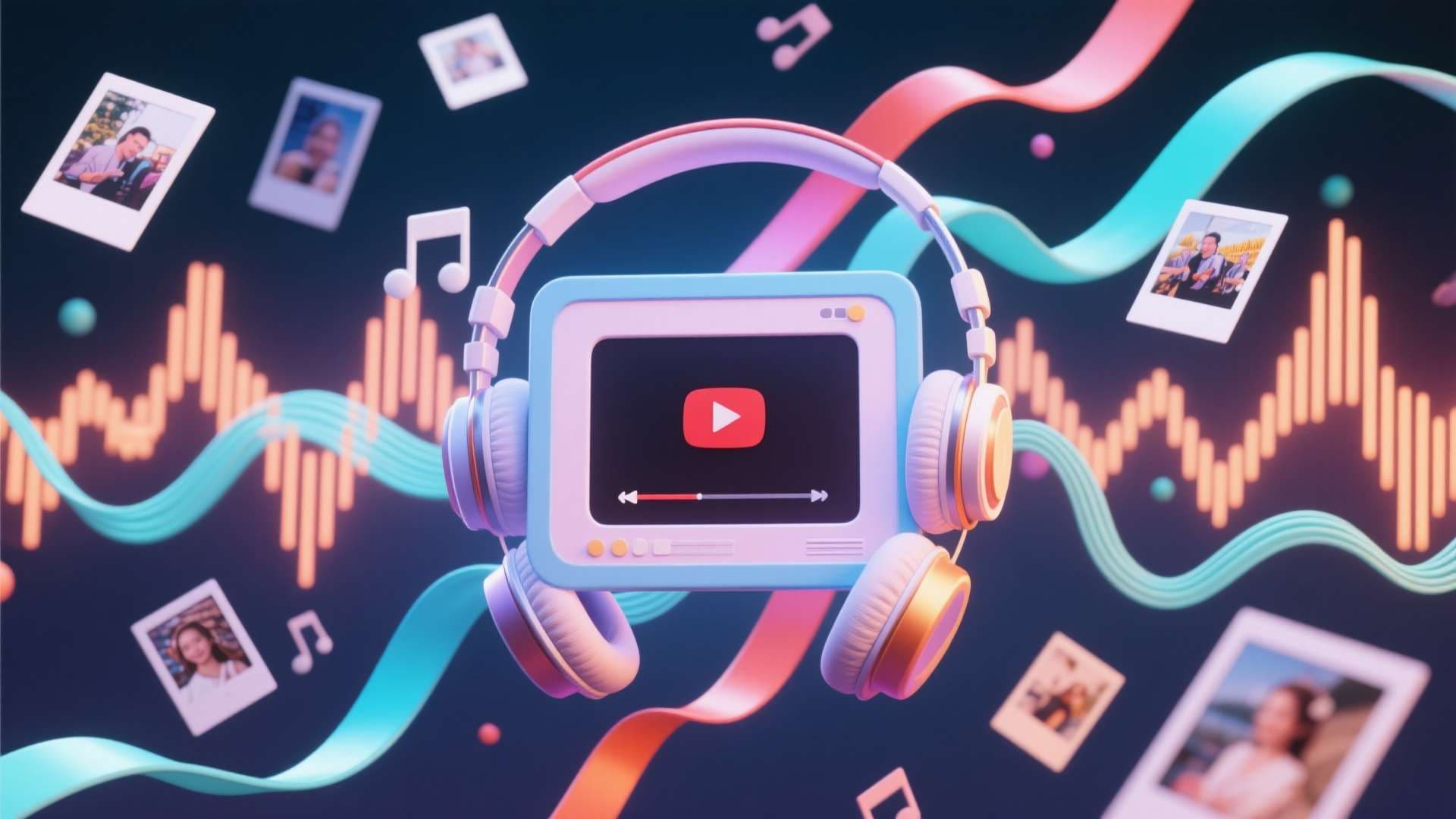
Why Do People Convert MP3 to Video for YouTube?
The most obvious reason is technical: YouTube requires video. But in practice, people convert MP3 to video for YouTube for a range of publishing and content repurposing needs.
Music Distribution and Promotion
Independent artists often upload songs to YouTube using cover art, album visuals, or lyric-based videos. This allows them to publish tracks quickly without producing a full music video. For many creators, the first step is simply to make a video from MP3 and image so the song can live on YouTube in a clean, accessible format.
Podcast and Interview Publishing
Podcasters frequently repurpose audio episodes into YouTube content. A simple branded background, waveform, or speaker photo is often enough to make the episode suitable for video-based distribution. This helps extend reach without requiring a separate filming setup.
Educational and Training Content
Teachers, coaches, and business trainers may have narration or recorded lessons in MP3 format. Turning these files into video makes them easier to distribute on YouTube, where audiences may already be searching for instructional content.
Meditation, Audiobook, and Spoken-Word Content
Long-form audio such as guided meditations, affirmations, stories, or book excerpts is also commonly published on YouTube. In these cases, a calm background image or subtle visual motion may be enough.
Better Discoverability and Branding
Even when the content starts as audio, video gives publishers more room to present branding, titles, subtitles, and visual identity. A YouTube upload can include a custom thumbnail, optimized title, description, chapters, and on-screen text. That makes the content easier to discover and more professional in presentation.
For all of these use cases, the goal is not just to move a file from one format to another. It is to create a publishable asset that looks intentional, works well on YouTube, and respects viewer expectations.
What You Need Before You Turn MP3 into a YouTube Video
Before you begin, it helps to gather your assets and plan the format of the final upload. This reduces errors later and makes the conversion process smoother.
1. Your MP3 Audio File
This is the core content. Make sure the file is final or close to final before you begin. If you later replace the audio, you may need to rebuild timing, subtitles, or visual sequences.
2. A Visual Element
To create YouTube video from MP3, you need some type of visual layer. The simplest option is a single image, but depending on your content, you may want:
- cover art
- a podcast-style branded template
- a still background with title text
- a waveform animation
- a sequence of photos or slides
- lyric text or subtitles
For many creators, a static image is enough. Others may want more motion to increase engagement. The best choice depends on your content type and production resources.
3. A YouTube-Friendly Layout
YouTube videos are usually created in a 16:9 horizontal format. A common canvas size is 1920 × 1080. Even if you only use one image, it should be prepared with YouTube-friendly dimensions so it does not appear stretched, cropped, or blurry.
4. Optional Text Elements
Depending on the purpose of the upload, you may want to add:
- a title card
- speaker or artist name
- subtitles or captions
- lyrics
- chapter labels
- call-to-action text
These are not always necessary, but they can improve clarity and viewer retention.
5. A Reliable Export Workflow
This is often overlooked. Many users can build a basic video, but the final export creates problems. The file may be too large, too low in quality, or not optimized for upload. That is why choosing the right audio to video converter for YouTube matters. It is not only about combining files. It is also about output control.
Before You Start
- Audio: Final MP3 file with the correct duration
- Visual: Cover image, background, waveform, or slideshow
- Layout: Preferably 16:9 for standard YouTube playback
- Text: Optional title, lyrics, subtitle, or branding layer
- Export: A YouTube-friendly output format such as MP4
Best Ways to Convert MP3 to Video for YouTube
There is more than one way to complete this task. The right method depends on how much control you need, how often you produce content, and how polished you want the final result to be.
Method 1. Use Wondershare UniConverter for a More Complete YouTube Workflow
Wondershare UniConverter is a practical choice for users who want to convert MP3 to video for YouTube with better control over quality, file size, and output format. It is especially useful for creators who need more than simple file merging, such as adding visuals, exporting cleanly, compressing large files, or preparing repeated uploads.
Compared with simpler tools, UniConverter is better suited for longer audio files, branded content, and workflows that involve both creation and post-processing. If you want to make a video from MP3 and image and then optimize it for YouTube in the same tool, this is one of the most efficient options.
Best for: podcasts, music uploads, educational audio, branded voiceovers, and repeat publishing workflows.
Method 2. Use Canva for Simple MP3-and-Image Video Creation
Canva is a good option for users who want to turn an MP3 file into a simple YouTube video with visual elements such as a background image, title text, or branded layout. It is especially helpful for beginners because the interface is easy to understand and the design process is straightforward.
This method works well when your main goal is to create a clean visual presentation without advanced editing. For example, you can build a podcast cover video, a spoken-audio video, or a simple promotional upload with text and branding. However, it is less suitable for users who need stronger control over compression, format conversion, or more advanced output management.
Best for: podcast cover videos, motivational audio, educational voice clips, and simple branded YouTube uploads.
Method 3. Use Kapwing for Fast Browser-Based MP3 to YouTube Video Conversion
Kapwing is a useful browser-based tool for users who want a quick way to create YouTube video from MP3 without installing desktop software. It allows you to combine audio with images, text, or simple visual elements and export the result directly from the browser.
This is a convenient choice for one-time tasks or lightweight content production. It is easier to access than desktop software, but it may not offer the same level of export flexibility or file-handling efficiency for long audio and high-volume workflows. For users who just want to build and publish a simple audio video quickly, it can still be a practical solution.
Best for: quick one-time conversions, lightweight YouTube uploads, and users who prefer online editing.
Method 4. Use InShot for Mobile MP3-to-Video Creation
InShot is a helpful option for users who want to create an MP3-based video on a phone or tablet. It works well for combining audio with a picture, short visual sequence, or simple text overlays, making it suitable for users who edit primarily on mobile devices.
Although mobile apps are convenient, they are usually less efficient for longer YouTube videos or more detailed export control. InShot is best when the workflow needs to stay simple and portable, rather than highly optimized for repeated desktop-level publishing.
Best for: mobile-first creators, quick edits on the go, and simple image-plus-audio videos.
Which Software Is Best?
The best software depends on how much control you need. If you want the most complete workflow for MP3 to video for YouTube, Wondershare UniConverter is the strongest overall choice because it supports creation, conversion, compression, and export in one place. If you want easy visual design, Canva is a good fit. If you prefer a quick browser-based workflow, Kapwing is a useful option. If you work mainly from a phone, InShot is one of the more practical mobile choices.
| Software | Platform | Best For | Main Advantage | Main Limitation |
|---|---|---|---|---|
| Wondershare UniConverter | Desktop | Users who want an all-in-one YouTube workflow | Can combine audio and visuals, then convert, compress, and export in one tool | Requires installation |
| Canva | Web/Desktop | Users who want simple visual design with MP3 audio | Easy to create clean branded layouts and title-based videos | Less suitable for advanced file processing and compression |
| Kapwing | Web | Users who need a quick online solution | No installation and simple browser-based editing | Less ideal for longer files or higher-volume workflows |
| InShot | Mobile | Users editing on a phone or tablet | Convenient for lightweight MP3 plus image video creation | Limited control for long-form YouTube publishing |
Best Software by Use Case
Why Wondershare UniConverter Is a Smart Choice for MP3-to-YouTube Video Creation
When choosing a tool for MP3 to video for YouTube, many users are not just looking for a basic converter. They also want better control over quality, file size, visuals, and final export. This is where Wondershare UniConverter stands out as a more practical all-in-one option.
Instead of using separate tools for file conversion, compression, and output adjustment, users can manage several parts of the workflow in one place. This is especially useful for creators who publish regularly and want a smoother, more repeatable process.
Better Control Over Output Quality
One common problem with simple converters is that the final video may look blurry, oversized, or poorly formatted for YouTube. UniConverter helps users create a cleaner result by offering stronger control over export settings, format compatibility, and file quality.
Useful for More Than Basic File Merging
Some tools only combine an audio file with an image. UniConverter is more helpful for users who may also need to optimize the file after creation, especially when working with long audio, branded content, or repeated publishing tasks.
Suitable for Different Content Types
Not every creator uses this workflow in the same way. Musicians may want to upload songs with cover art, podcasters may need branded background videos, and educators may want to publish spoken lessons with simple visuals. UniConverter is flexible enough to support these different content needs without forcing an overly complicated workflow.
Helpful for Repeated Publishing Workflows
If you only need a one-time MP3-to-video conversion, a lightweight tool may be enough. But if you often create YouTube content from audio, efficiency becomes more important. UniConverter is a better fit for users who want a more reliable long-term workflow rather than a quick one-off solution.
Best Visual Formats for MP3 YouTube Videos
Not every MP3-based YouTube video should look the same. The best visual style depends on the content itself and how much viewer engagement you want to encourage.
Static Image Video
This is the simplest format. A single background image stays on screen while the audio plays. It works well for podcasts, basic music uploads, spoken messages, and meditations.
Its main advantage is speed. Its main limitation is lower visual engagement.
Album Art Video
This format uses cover art or branded artwork as the main visual. It is common for music creators who want a clean upload without making a full video. It is simple, professional, and effective when the artwork is strong.
Lyrics Video
Lyrics videos are more engaging for music content and can help viewers follow along. They require more preparation because text timing must match the audio, but they often perform better than static-image uploads.
Waveform Video
A waveform or reactive audio visualizer gives motion to otherwise static content. This format is popular for podcasts, music, and spoken audio because it adds visual energy without requiring full-scale animation.
Slideshow Video
A slideshow is useful for storytelling, interviews, training content, or educational audio. It allows different images or slides to appear over time, which helps maintain viewer interest during longer uploads.
When choosing a format, the main question is not “what looks most complex?” but “what best supports the content?” A meditation audio file does not need the same visual treatment as a song release or a tutorial voiceover. Choose a format that strengthens comprehension and presentation without distracting from the audio.
| Video Style | Best For | Effort Level | Viewer Appeal |
|---|---|---|---|
| Static image video | Podcasts, simple music uploads, voice content | Very Low | Basic |
| Album cover video | Songs and music publishing | Low | Medium |
| Lyrics video | Music promotion and audience engagement | Medium | High |
| Waveform video | Podcasts, audio branding, modern music content | Medium | High |
| Slideshow video | Educational, storytelling, or presentation audio | Medium | Medium |
Common Problems When Converting MP3 to YouTube Video
Even simple workflows can run into issues. Here are some of the most common problems users face when they create a YouTube video from MP3.
The Image Does Not Last as Long as the Audio
If the visual layer is not set to match the audio duration, the video may end early or display incorrectly. Always confirm that the image or sequence extends across the full timeline.
The Exported Video File Is Too Large
This often happens with high-resolution visuals or inefficient export settings. A file that is unnecessarily large can slow uploads and create storage problems. Compression tools are helpful here, especially when working with long audio.
The Video Looks Blurry
Low-resolution images are a common cause. If you use a small image and stretch it to a 16:9 video frame, the result may look soft or pixelated. Prepare visuals at appropriate dimensions whenever possible.
The Aspect Ratio Is Wrong
A mismatch between your source visual and your video layout can lead to black bars, awkward cropping, or distorted composition. Build with YouTube’s horizontal format in mind from the beginning.
The Final Video Feels Too Plain
Technically, a static image is enough. But if the content is long, the final video may feel underdeveloped. In such cases, consider adding subtle text, waveform motion, chapter cards, or a slideshow to improve viewing experience.
The Export Format Is Unsuitable
If the file is exported in an inconvenient or low-compatibility format, uploading may become harder than necessary. MP4 remains the safest and most practical choice for most YouTube publishing workflows.
Conclusion
To upload audio content to YouTube, you need more than an MP3 file. You need to turn that audio into a proper video by adding a visual layer and exporting it in a format YouTube supports. That is the core logic behind every MP3 to video for YouTube workflow.
The best method depends on your goals. If you only need a quick one-time file, a basic tool may be enough. But if you want stronger visual control, better quality, easier compression, and a smoother overall process, desktop software is the more reliable choice.
For users who want to convert MP3 to video for YouTube without juggling multiple apps, Wondershare UniConverter is a practical solution. It helps combine audio and visuals, supports useful editing and optimization steps, and makes it easier to produce a clean, upload-ready result. Whether you are publishing music, podcasts, lessons, or spoken-word content, the key is to choose a workflow that balances simplicity, quality, and repeatability.