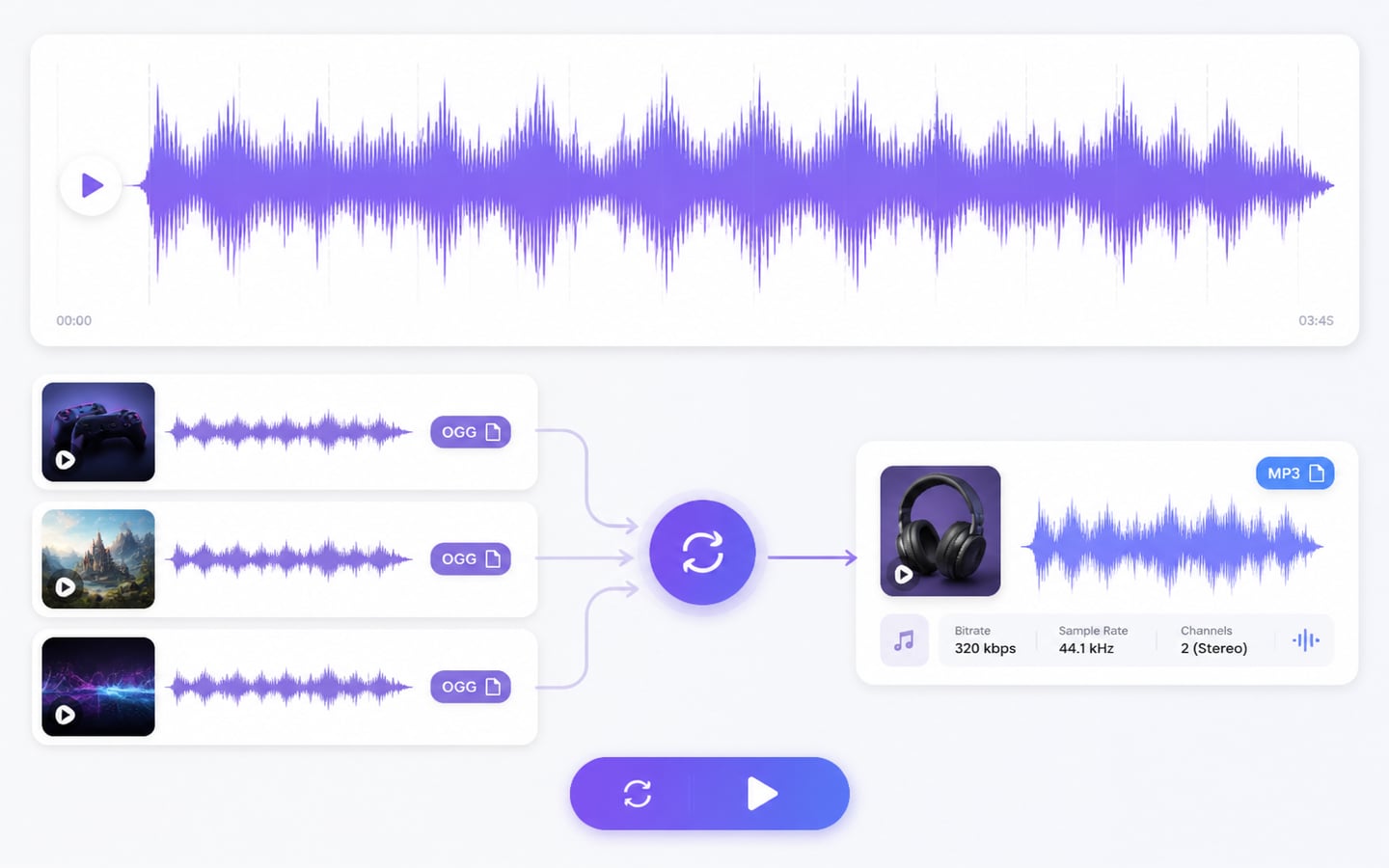
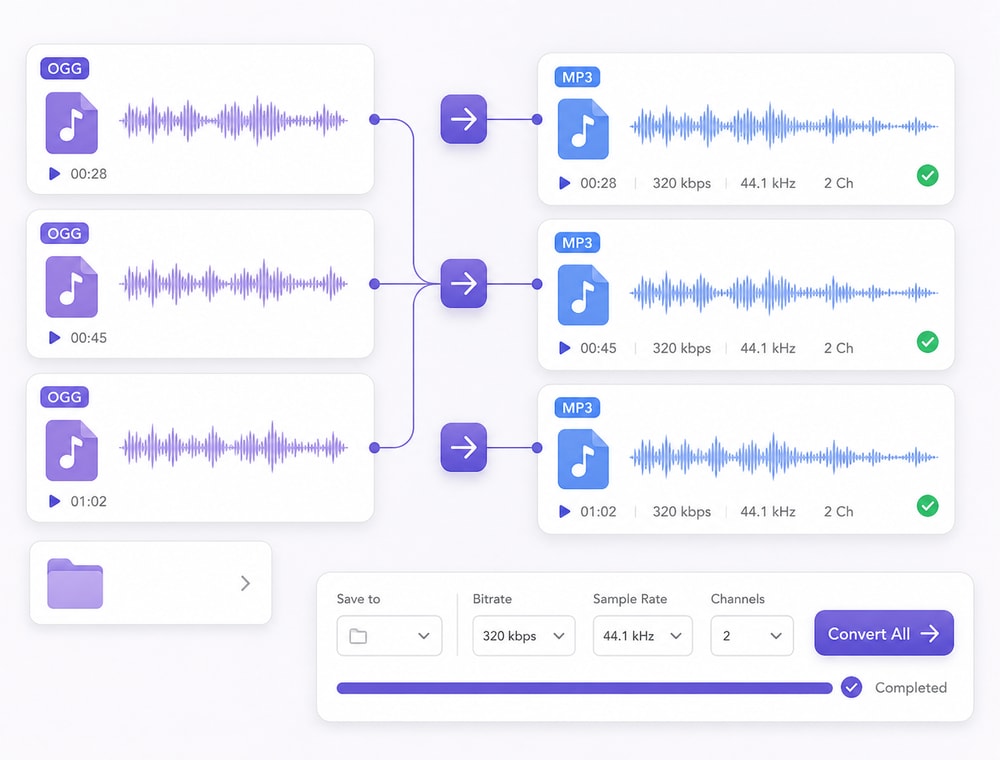
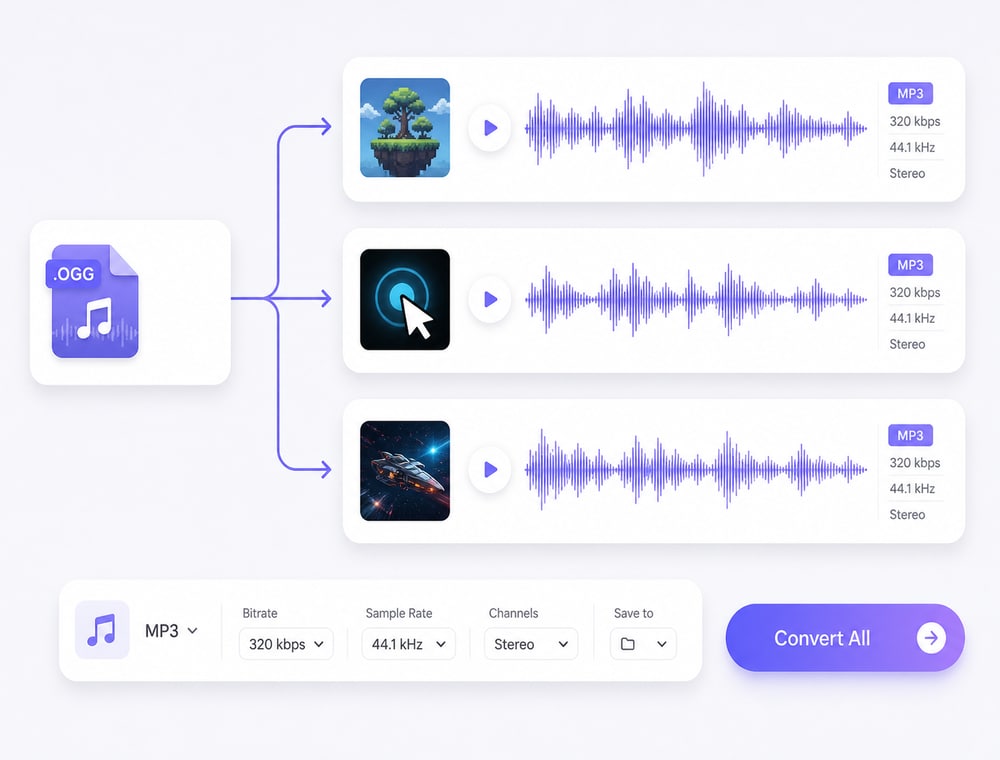
OGG and related open-format assets often work inside games, websites, and applications but create friction during stakeholder review. Produce a separate MP3 listening set without replacing the files used by the product or project.
Compare batch capacity, file handling, end-to-end turnaround, and workflow depth. Many online converters can process multiple files, while Desktop keeps recurring jobs local and connected from setup to delivery.
Compare the workflow
Recommended for larger jobsUniConverter Desktop
Convenient browser accessOnline Batch Tools
Batch Scale & Service Limits
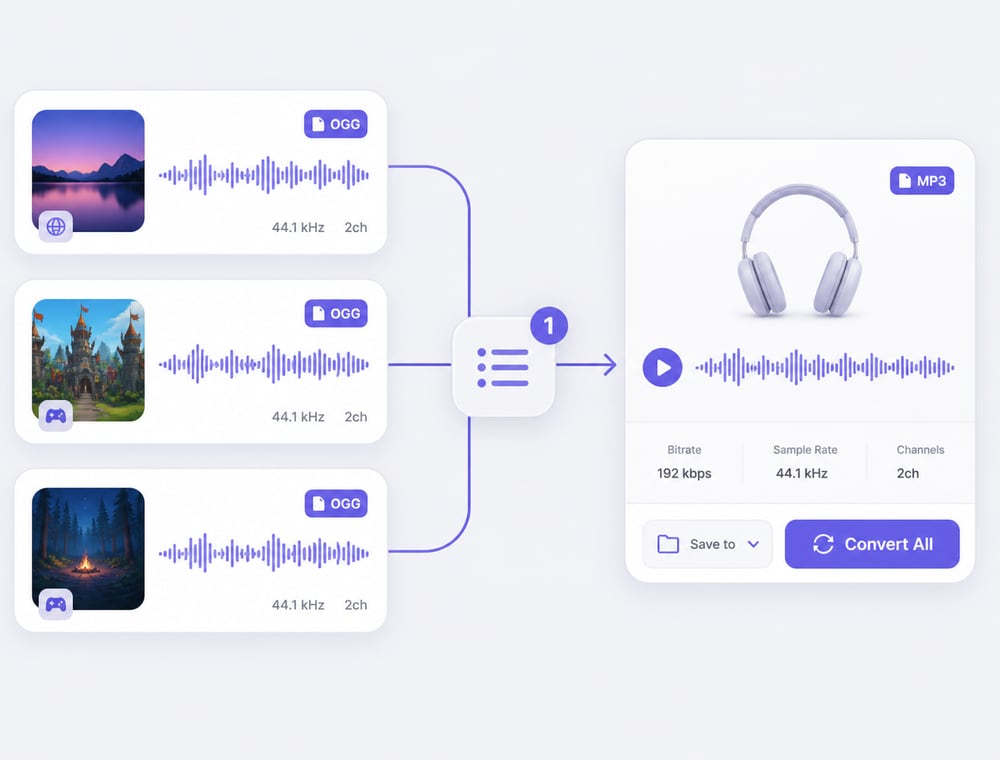
✓Build recurring multi-file queues from local folders and keep the entire collection organized in one Desktop job.
Many cloud converters accept multiple files or batch uploads; available batch size and account features are set by each service.
File Location & Privacy
✓Keep standard conversion work on the computer and save results directly to the selected local folder without uploading the full collection through a browser.
Cloud conversion uploads files to the provider, making its storage, retention, deletion, and data-handling policy part of the workflow decision.
Total Turnaround
✓Skip browser transfer stages and move directly from local sources to locally saved results, helping repeated collection work keep moving.
Cloud processing can run several files, while upload time, remote processing, service queues, and download remain part of end-to-end turnaround.
Workflow Depth
✓Choose Desktop when recurring work needs broader format or profile coverage, richer output settings, queued-file preparation, compatible metadata review, organized local delivery, or continuity with adjacent tools.
Choose Online when browser access matters most and the service offers the formats, controls, and batch capacity required for the job.
Simple decision:
Desktop emphasizes local control and a deeper recurring workflow; Online emphasizes browser access and service-managed processing.
Developers and media teams usually need two libraries: production assets for the product and familiar files for reviewers. Wondershare UniConverter Audio Converter can create the MP3 review set while keeping the OGG or Opus originals tied to the project.
Collect Open-Format Assets by Project
Group interface sounds, game effects, web audio, dialogue, or application media by release or feature. That context is more useful to reviewers than a single mixed folder of anonymous assets.
Choose MP3 for the stakeholder devices and collaboration tools in use. The review format improves access, while the production engine may still require the original open-format files.
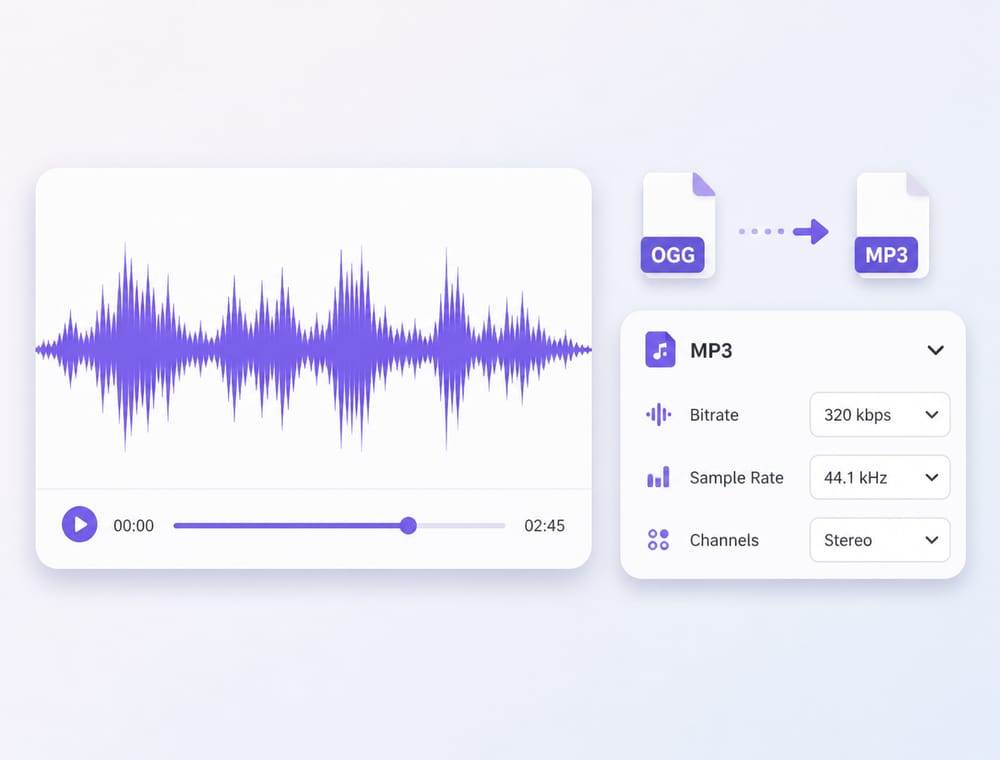
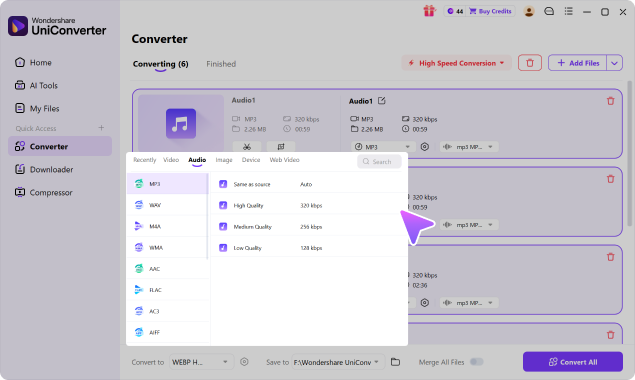
Select an available MP3 profile
Match settings to the destination
Address bitrate, source quality, and downstream playback
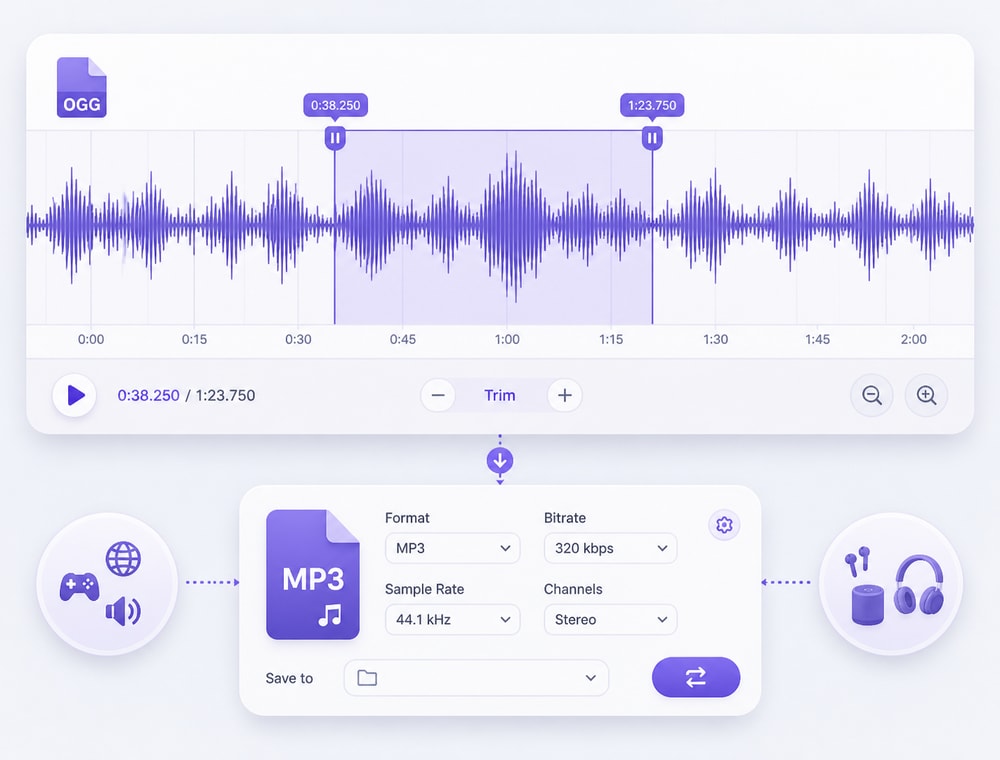
Preview speech and long recordings where Trim or supported Audio preparation might be justified. Short interface and game sounds should not inherit those settings without a project requirement.
Trim on a waveform timeline
Preview supported Audio and Speed changes
Apply shared changes only when suitable
Input support is broader than output support and can differ between
Windows, Mac, Online, and product versions.
Keep Production Assets Separate from Review Copies
Preserve asset identifiers and folder relationships so feedback on an MP3 copy can be traced back to the correct OGG production file. Codec variation still needs review when sources come from different pipelines.
Keep original source files available
Review representative outputs
Verify important fields in the receiving app
Avoid universal quality or metadata promises
Image Converter handles format conversion. These additional
operations
belong to Batch Image Editor.
Use the source-versus-output view to align storage, quality expectations, compatibility, and metadata checks with how the MP3 files will be used.
OGG vs. MP3: What Changes During Batch Audio Conversion?
Compare the source role, output destination, quality expectations, and metadata boundary before converting OGG to MP3. The format change serves a workflow goal; it does not automatically improve the source.
Workflow controls and value
OGG
MP3
Common role
OGG: open web, game, and application audio
MP3: portable listening and broad playback
Storage model
a container that can carry different audio codecs
lossy compressed audio
Quality expectation
The result remains limited by the detail and artifacts already present in the OGG source
Changing to MP3 can alter size, compression, and compatibility but cannot restore discarded detail
Metadata & compatibility
Compatible OGG fields should be checked before conversion
Tag, artwork, channel, and playback support vary with the MP3 profile, platform, version, field, and receiving app
Common AudioListening & WebLossless & StudioVideo Audio Sources
Explore current audio inputs, outputs, codecs, and quality options in theUniConverter Tech Specs.
How to Batch Convert OGG to MP3
Define the production asset set and the review audience separately, then test whether the MP3 copies remain easy to identify inside the collaboration workflow.
This workflow creates accessible review derivatives for people outside the production toolchain while leaving the open-format assets in place for the website, game, or application.
Prepare Game Audio for Stakeholder Review
Game teams can send MP3 copies of effects, dialogue, and music cues to producers or licensors who do not use the engine toolchain. Stable asset names let feedback return to the correct OGG production files.
Share Web Audio with Mainstream Players
Web teams can prepare browser-audio collections for client review in familiar players. The review set simplifies listening, while the deployed site should continue using the approved production formats and compression choices.
Create Compatible App-Sound Libraries
Application developers can give QA, localization, and product teams a common listening package without changing the assets bundled in the build. Folder and identifier discipline prevents review copies from becoming accidental production replacements.
Deliver Open-Format Speech Recordings
Speech and communication projects can distribute accessible MP3 references to stakeholders using older or restricted players. The original open-format recordings remain available for engineering tests, new encodes, and source verification.
What UniConverter Users Are Saying
These reviews describe users' experience with Wondershare UniConverter as a broader conversion and editing product, rather than feedback specifically limited to the Batch Audio Converter. Review sources and publication dates are shown where available.
★★★★★
“Very configurable for the exact result you need.”
Its flexible conversion controls make it easier to prepare files for different output and delivery requirements.
Johnson
★★★★★
“The files can be used across IT platforms so easily!”
This kind of compatibility is useful when converted media needs to move between common systems and delivery workflows.
Williams
★★★★★
“Wondershare UniConverter is incredibly versatile.”
The broader conversion and editing toolkit supports users who need to complete more than one isolated media task.
Olivia
Explore UniConverter reviews and independent coverage across trusted software platforms.
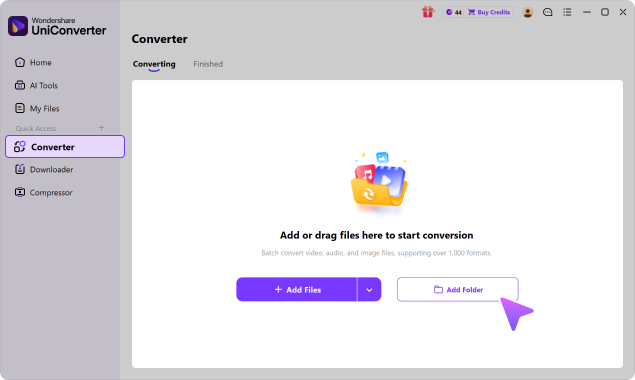
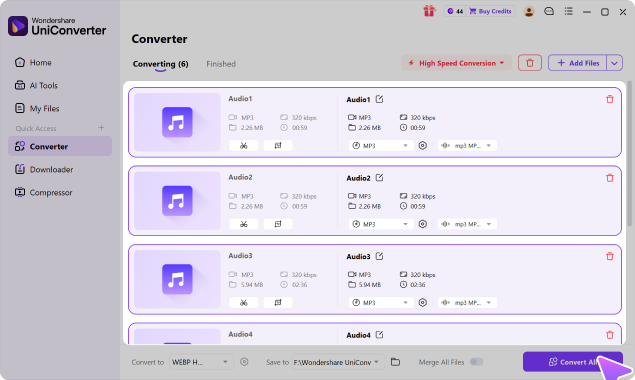
Open Wondershare UniConverter Audio Converter, add the related OGG sources, choose an available MP3 profile, review representative files and the destination, then select Convert All.
02
When is Desktop better for OGG or Opus assets and mainstream review playback?
Use Desktop when open-format assets and stakeholder playback make the job recurring, folder-based, or easier to verify locally. Online remains useful for a small isolated file when upload and download stages are acceptable.
03
What should I check before creating MP3 for this workflow?
Review the output profile against open-format assets and stakeholder playback. Available codec, bitrate, sample rate, bit depth, channel, and quality choices vary with the source, MP3, platform, and installed version.
04
Can I trim or prepare a file before conversion?
A queued file can expose Trim plus supported Audio and Speed preparation. This is pre-conversion work inside Converter rather than a full multi-track editing, mixing, or mastering workspace.
05
Will metadata transfer from OGG to MP3?
Compatible tags, metadata, and artwork may be retained or edited in supported audio-to-audio workflows. Verify the specific OGG fields in the MP3 result and receiving application.
06
Does converting OGG to MP3 improve audio quality?
No automatic improvement should be assumed. Converting OGG to MP3 can change compression, size, compatibility, and workflow fit, but it cannot restore detail already missing from the source.
Create a Review Set from the Open-Format Assets
Create the MP3 review package, keep every filename traceable to its OGG production asset, and leave the project library unchanged for development and release work.