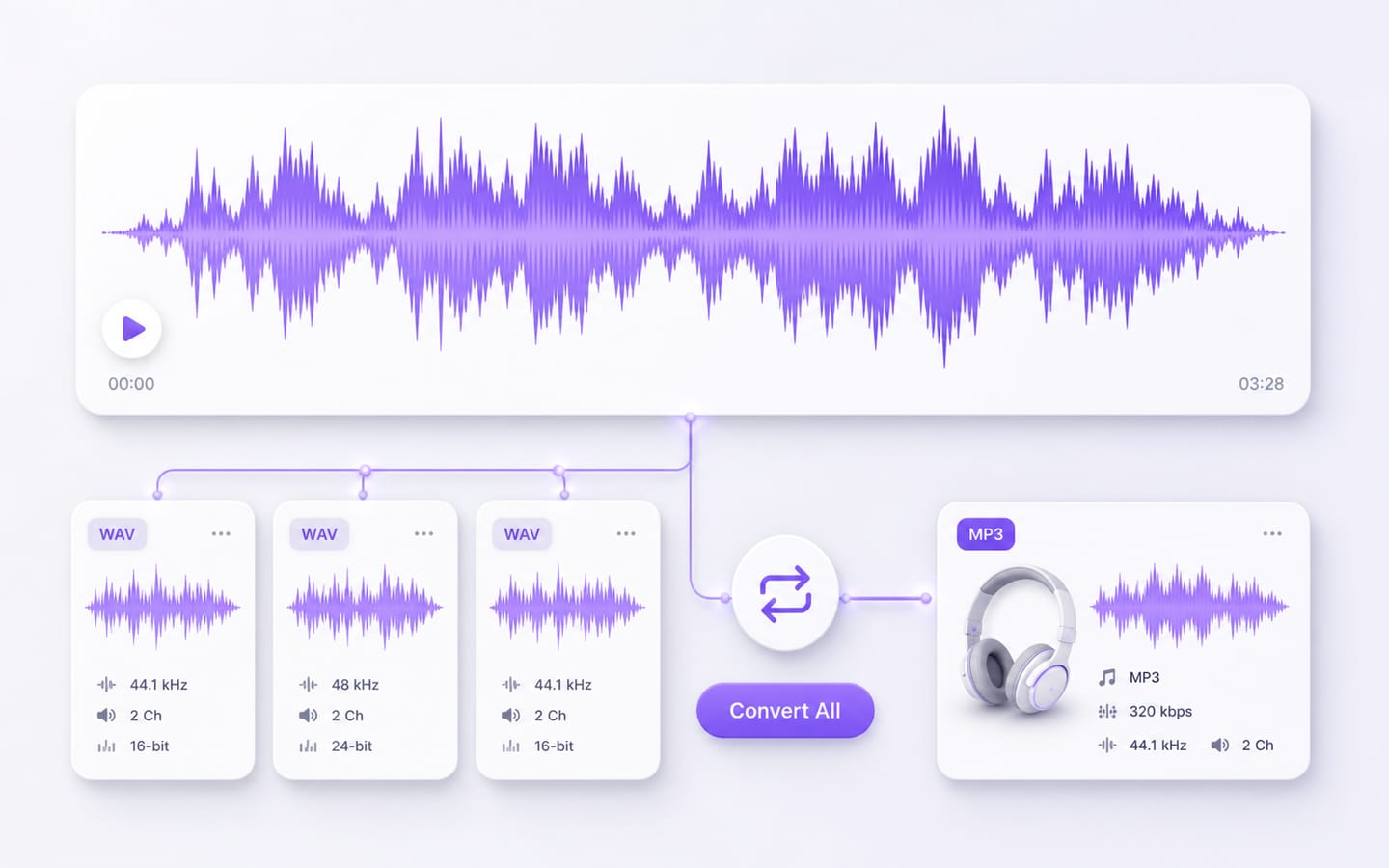
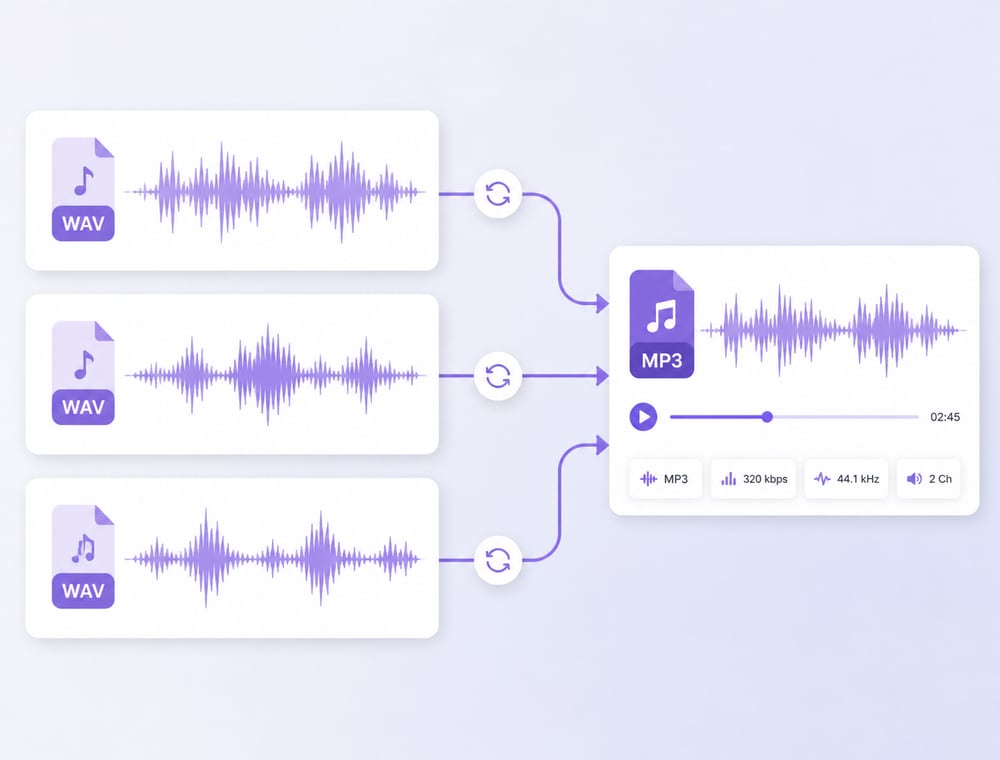
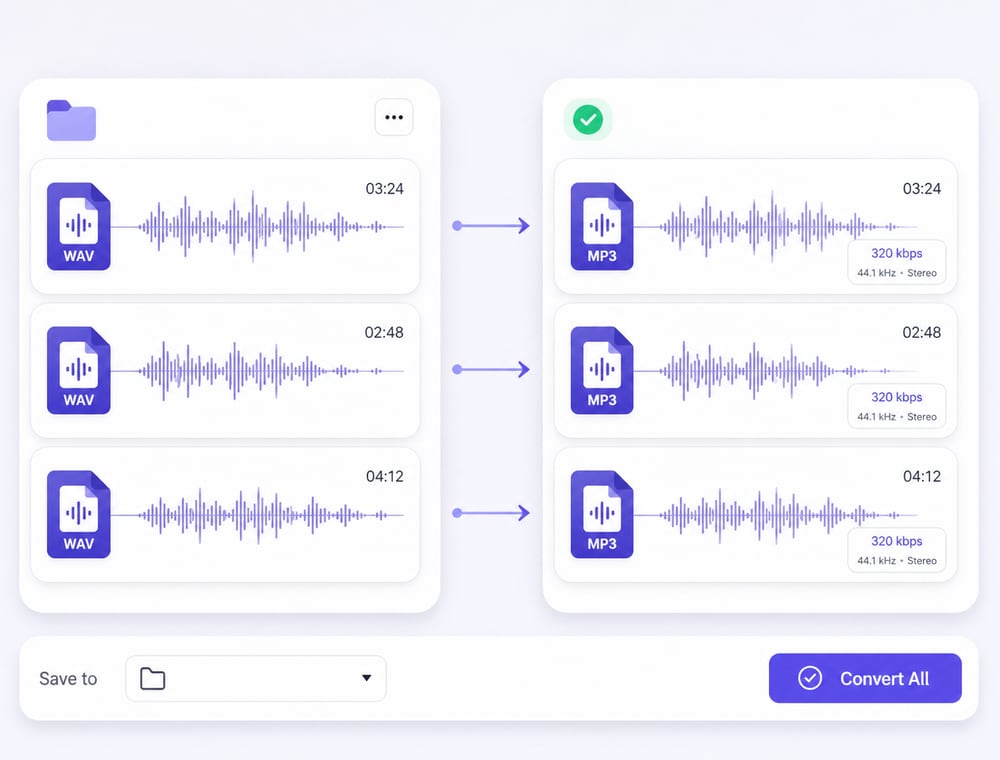
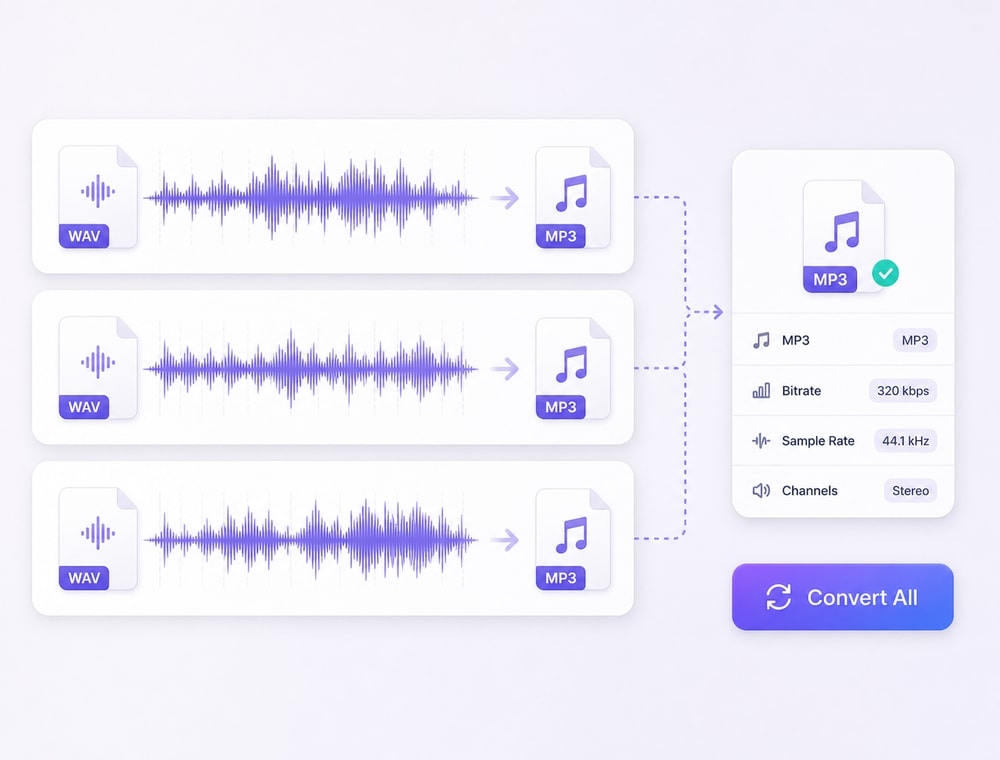
Large WAV masters are ideal for editing and revision, but they are cumbersome for review links, podcast approvals, and everyday playback. Convert the production folder into a coordinated MP3 delivery set while keeping the editable masters intact.
Compare batch capacity, file handling, end-to-end turnaround, and workflow depth. Many online converters can process multiple files, while Desktop keeps recurring jobs local and connected from setup to delivery.
Compare the workflow
Recommended for larger jobsUniConverter Desktop
Convenient browser accessOnline Batch Tools
Batch Scale & Service Limits
✓Build recurring multi-file queues from local folders and keep the entire collection organized in one Desktop job.
Many cloud converters accept multiple files or batch uploads; available batch size and account features are set by each service.
File Location & Privacy
✓Keep standard conversion work on the computer and save results directly to the selected local folder without uploading the full collection through a browser.
Cloud conversion uploads files to the provider, making its storage, retention, deletion, and data-handling policy part of the workflow decision.
Total Turnaround
✓Skip browser transfer stages and move directly from local sources to locally saved results, helping repeated collection work keep moving.
Cloud processing can run several files, while upload time, remote processing, service queues, and download remain part of end-to-end turnaround.
Workflow Depth
✓Choose Desktop when recurring work needs broader format or profile coverage, richer output settings, queued-file preparation, compatible metadata review, organized local delivery, or continuity with adjacent tools.
Choose Online when browser access matters most and the service offers the formats, controls, and batch capacity required for the job.
Simple decision:
Desktop emphasizes local control and a deeper recurring workflow; Online emphasizes browser access and service-managed processing.
Recording sessions and final masters should not be passed around as the default listening package. Wondershare UniConverter Audio Converter helps production teams turn a group of WAV exports into practical MP3 review or publishing files from one organized queue.
Batch WAV to MP3 Converter for Smaller Delivery Copies
Collect the approved mixes, interviews, episodes, or voice recordings that belong to the same review round. Keeping draft and final masters separated prevents outdated material from entering the delivery batch.
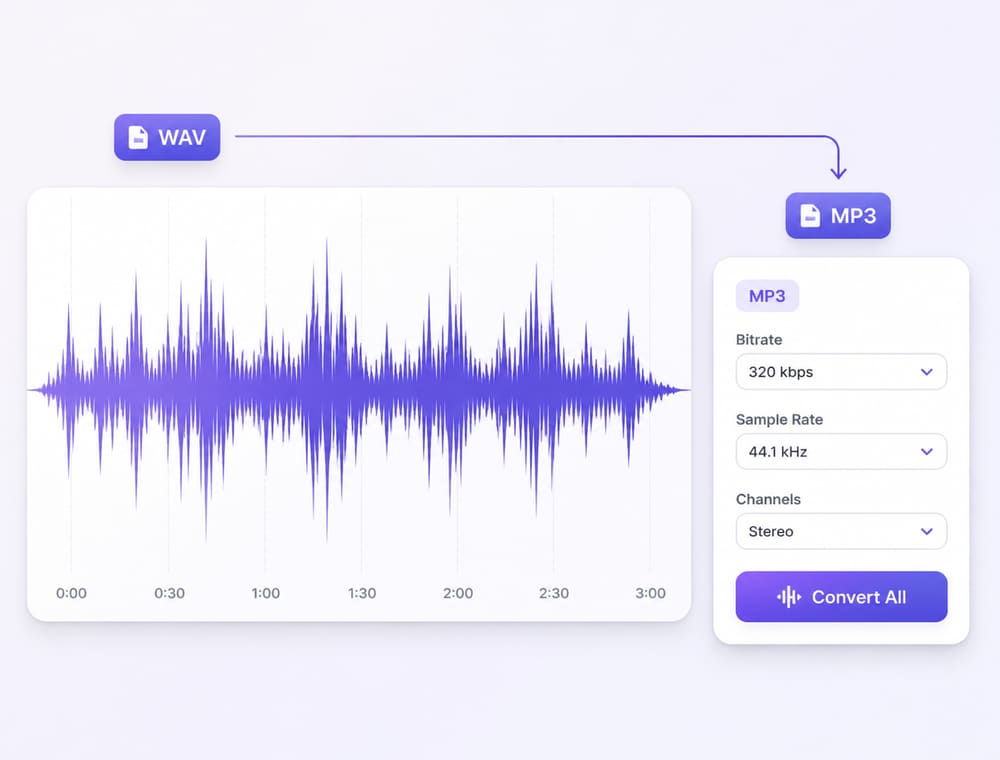
Set MP3 around the review platform, publishing destination, and transfer method. The objective is a usable delivery copy, not an automatic improvement or a guaranteed reduction for every recording.
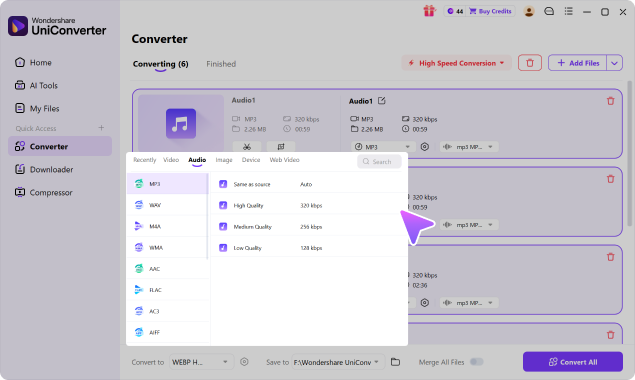
Select an available MP3 profile
Match settings to the destination
Address bitrate, source quality, and downstream playback
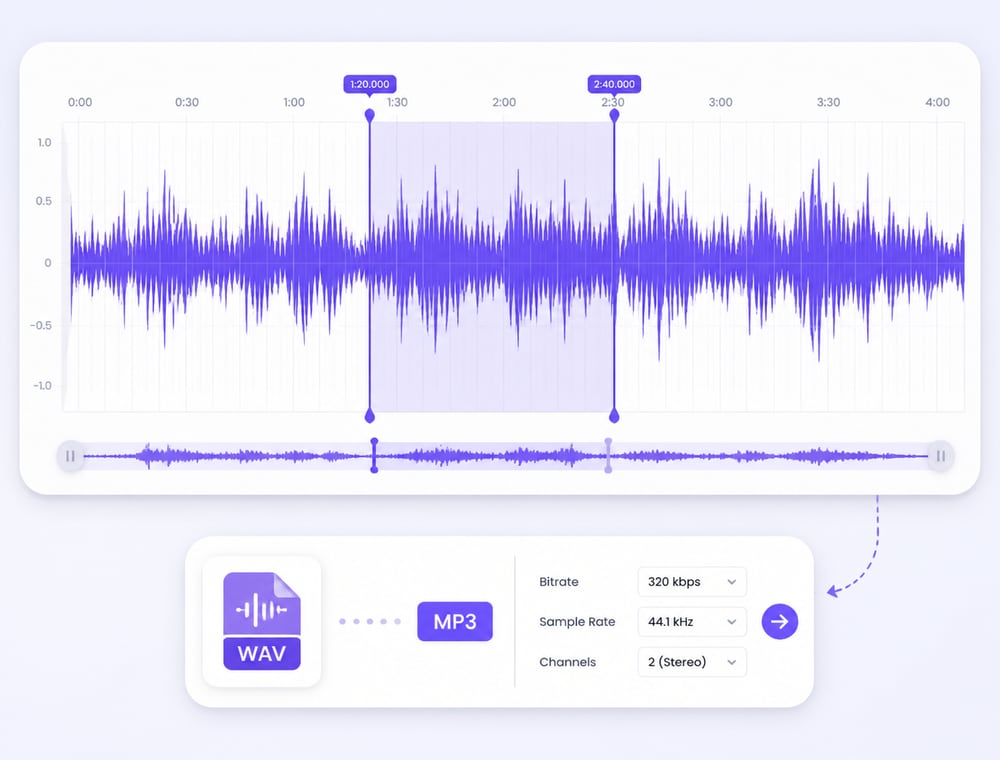
Trim an accidental lead-in, check speech-focused Audio controls, or review Speed only when an individual recording requires preparation. Preserve the untouched WAV master for any later creative decision.
Trim on a waveform timeline
Preview supported Audio and Speed changes
Apply shared changes only when suitable
Input support is broader than output support and can differ between
Windows, Mac, Online, and product versions.
Use clear filenames and a dedicated delivery folder so producers and reviewers can match each MP3 copy to its original master. Verify tags where the receiving application relies on them.
Keep original source files available
Review representative outputs
Verify important fields in the receiving app
Avoid universal quality or metadata promises
Image Converter handles format conversion. These additional
operations
belong to Batch Image Editor.
Use the source-versus-output view to align storage, quality expectations, compatibility, and metadata checks with how the MP3 files will be used.
WAV vs. MP3: What Changes During Batch Audio Conversion?
Compare the source role, output destination, quality expectations, and metadata boundary before converting WAV to MP3. The format change serves a workflow goal; it does not automatically improve the source.
Workflow controls and value
WAV
MP3
Common role
WAV: editing, interchange, and production handoff
MP3: portable listening and broad playback
Storage model
usually uncompressed PCM audio
lossy compressed audio
Quality expectation
The result remains limited by the detail and artifacts already present in the WAV source
Changing to MP3 can alter size, compression, and compatibility but cannot restore discarded detail
Metadata & compatibility
Compatible WAV fields should be checked before conversion
Tag, artwork, channel, and playback support vary with the MP3 profile, platform, version, field, and receiving app
Common AudioListening & WebLossless & StudioVideo Audio Sources
Explore current audio inputs, outputs, codecs, and quality options in theUniConverter Tech Specs.
How to Batch Convert WAV to MP3
Treat the job as a delivery handoff: select approved masters, define the review specification, and test the result outside the production folder before releasing the batch.
This workflow belongs between production and distribution, where large editable sources need to become practical files for approval, publishing, or client listening.
Bulk Convert WAV to MP3 for Podcast Review Copies
Podcast teams can convert approved WAV episode masters into MP3 review files for producers, guests, and sponsors. The lighter set travels more easily, while the uncompressed masters remain available for final edits and publishing changes.
Prepare Music Demos for Listening
Musicians and engineers can prepare listening copies of mixes for band members or clients without sending the session masters. Clear version names help every reviewer comment on the correct song, mix, and revision round.
Create Lightweight Interview Deliveries
Journalists and research teams can distribute compact interview copies to editors or transcription reviewers. Keeping the original recordings separate protects the evidence source while the MP3 files support faster access and collaboration.
Publish Speech Archives More Efficiently
Organizations with recurring speech archives can build consistent publishing copies from large recording exports. A reviewed queue standardizes destination folders and naming without presenting the compressed delivery set as a replacement archive.
What UniConverter Users Are Saying
These reviews describe users' experience with Wondershare UniConverter as a broader conversion and editing product, rather than feedback specifically limited to the Batch Audio Converter. Review sources and publication dates are shown where available.
★★★★★
“Very configurable for the exact result you need.”
Its flexible conversion controls make it easier to prepare files for different output and delivery requirements.
Johnson
★★★★★
“The files can be used across IT platforms so easily!”
This kind of compatibility is useful when converted media needs to move between common systems and delivery workflows.
Williams
★★★★★
“Wondershare UniConverter is incredibly versatile.”
The broader conversion and editing toolkit supports users who need to complete more than one isolated media task.
Olivia
Explore UniConverter reviews and independent coverage across trusted software platforms.
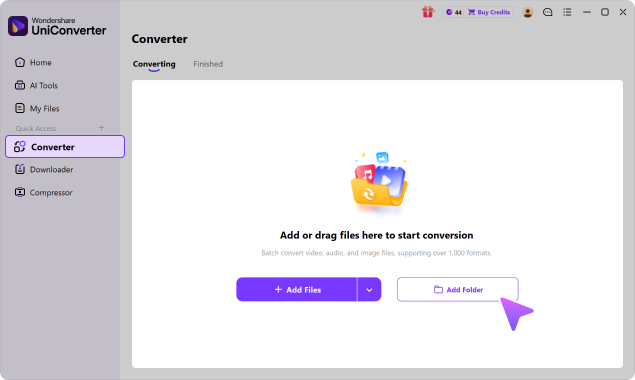
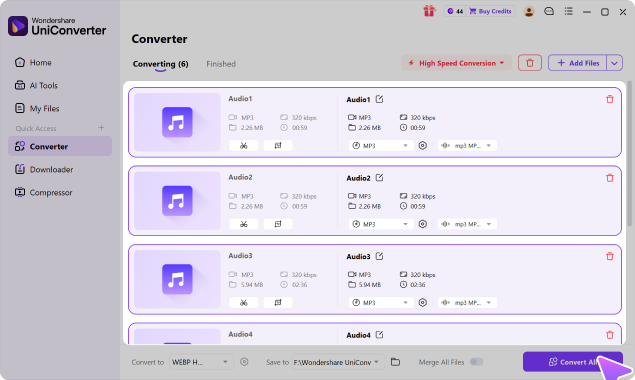
Open Wondershare UniConverter Audio Converter, add the related WAV sources, choose an available MP3 profile, review representative files and the destination, then select Convert All.
02
When is Desktop better for uncompressed masters and compact delivery copies?
Use Desktop when large production masters and lightweight review copies make the job recurring, folder-based, or easier to verify locally. Online remains useful for a small isolated file when upload and download stages are acceptable.
03
What should I check before creating MP3 for this workflow?
Review the output profile against large production masters and lightweight review copies. Available codec, bitrate, sample rate, bit depth, channel, and quality choices vary with the source, MP3, platform, and installed version.
04
Can I trim or prepare a file before conversion?
A queued file can expose Trim plus supported Audio and Speed preparation. This is pre-conversion work inside Converter rather than a full multi-track editing, mixing, or mastering workspace.
05
Will metadata transfer from WAV to MP3?
Compatible tags, metadata, and artwork may be retained or edited in supported audio-to-audio workflows. Verify the specific WAV fields in the MP3 result and receiving application.
06
Does converting WAV to MP3 improve audio quality?
No automatic improvement should be assumed. Converting WAV to MP3 can change compression, size, compatibility, and workflow fit, but it cannot restore detail already missing from the source.
Turn the Master Folder into a Practical Delivery Set
Turn the approved WAV masters into a clear MP3 delivery set for reviewers and publishers, while preserving the source files required for edits, corrections, and new exports.