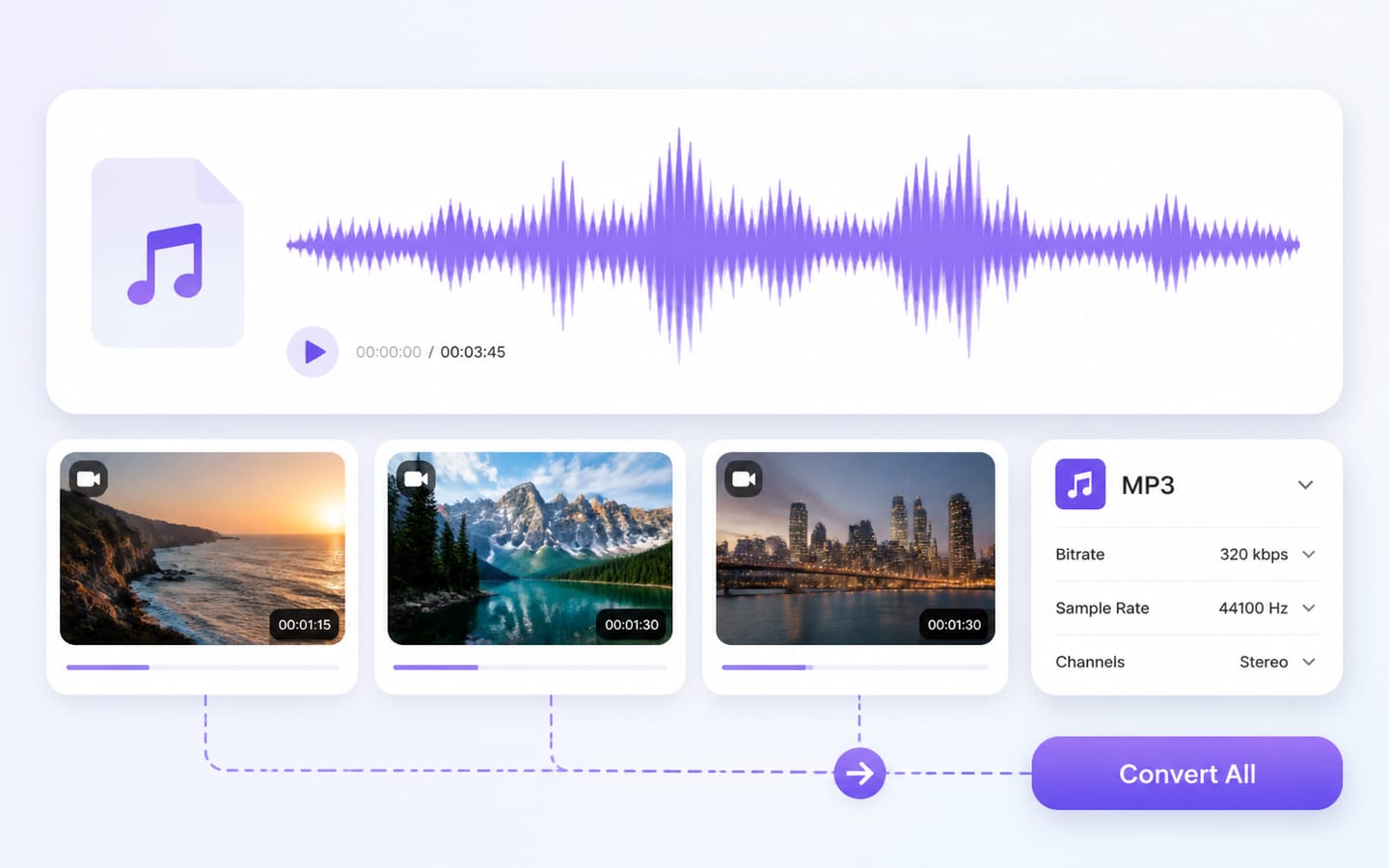
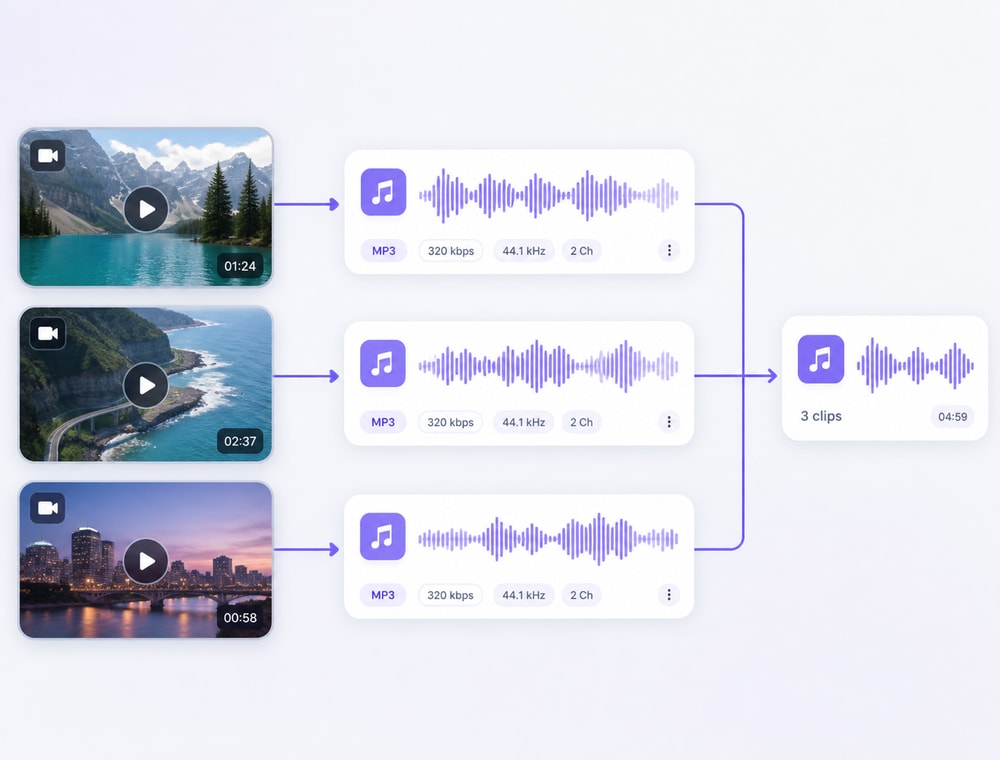
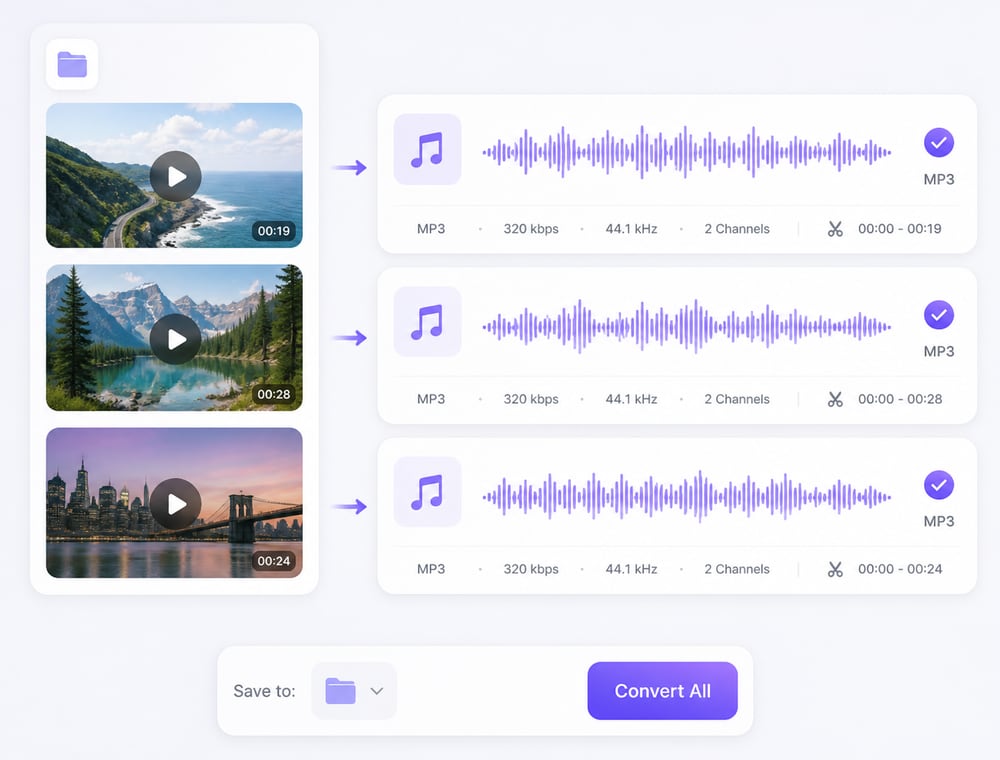
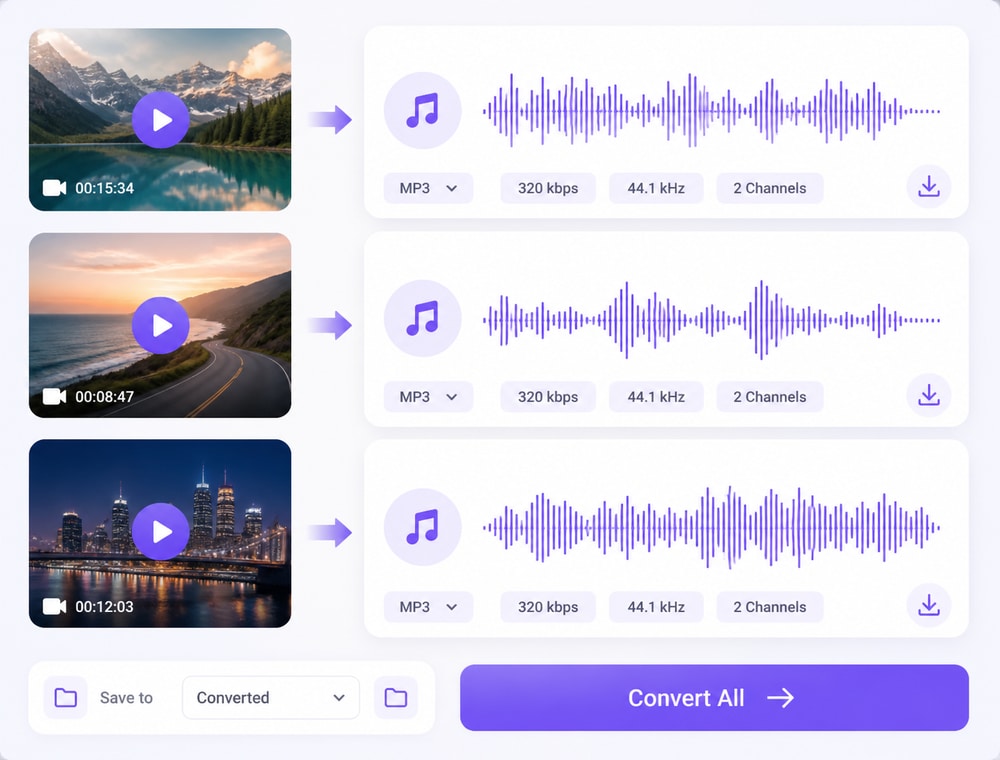
When the screen is no longer needed, lectures, interviews, meetings, and creator recordings can become an audio-first collection. Extract listening files from the video folder while retaining the originals for visual context and verification.
Compare batch capacity, file handling, end-to-end turnaround, and workflow depth. Many online converters can process multiple files, while Desktop keeps recurring jobs local and connected from setup to delivery.
Compare the workflow
Recommended for larger jobsUniConverter Desktop
Convenient browser accessOnline Batch Tools
Batch Scale & Service Limits
✓Build recurring multi-file queues from local folders and keep the entire collection organized in one Desktop job.
Many cloud converters accept multiple files or batch uploads; available batch size and account features are set by each service.
File Location & Privacy
✓Keep standard conversion work on the computer and save results directly to the selected local folder without uploading the full collection through a browser.
Cloud conversion uploads files to the provider, making its storage, retention, deletion, and data-handling policy part of the workflow decision.
Total Turnaround
✓Skip browser transfer stages and move directly from local sources to locally saved results, helping repeated collection work keep moving.
Cloud processing can run several files, while upload time, remote processing, service queues, and download remain part of end-to-end turnaround.
Workflow Depth
✓Choose Desktop when recurring work needs broader format or profile coverage, richer output settings, queued-file preparation, compatible metadata review, organized local delivery, or continuity with adjacent tools.
Choose Online when browser access matters most and the service offers the formats, controls, and batch capacity required for the job.
Simple decision:
Desktop emphasizes local control and a deeper recurring workflow; Online emphasizes browser access and service-managed processing.
Make Recorded Video Useful When Only the Audio Matters
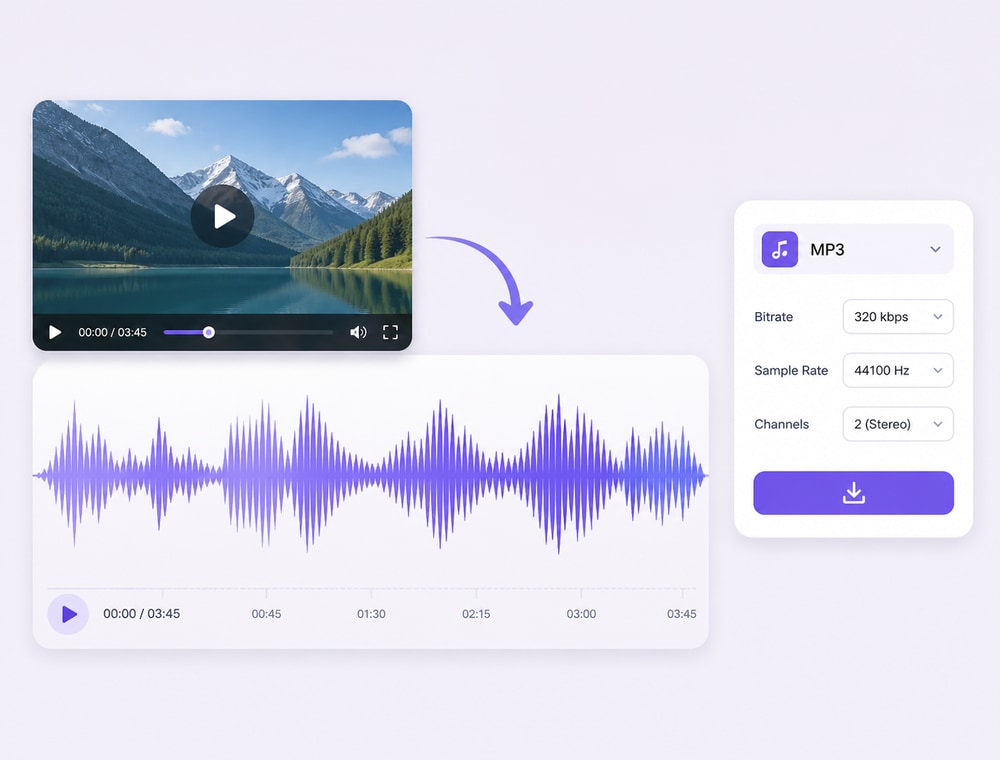
A video archive is not always the most convenient way to review speech or listen on the move. Wondershare UniConverter Audio Converter can extract an organized audio set from supported recordings without presenting the result as a replacement for the source video.
Collect the Recordings That Belong Together
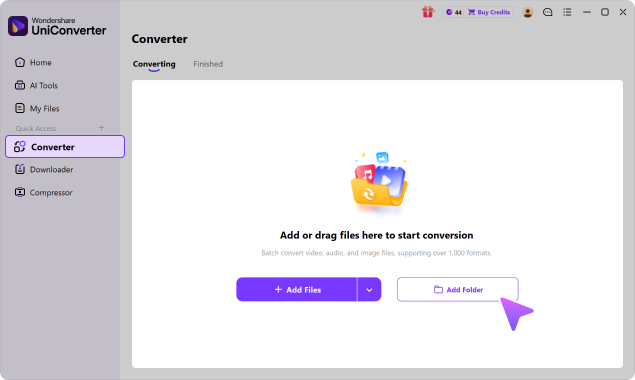
Choose the lectures, interviews, meetings, tutorials, or approved archive recordings that genuinely benefit from audio-only access. Keep unrelated visual material outside the extraction queue.
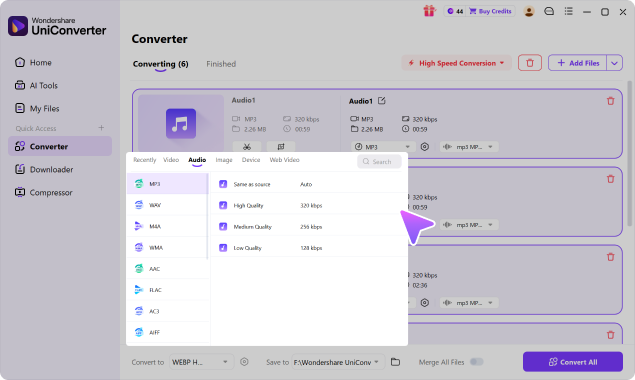
Select an available audio profile around commuting, research review, accessibility, or reference use. The embedded audio track sets the quality ceiling for every extracted result.
Select an available audio profile
Match settings to the destination
Address output compatibility and source-track quality
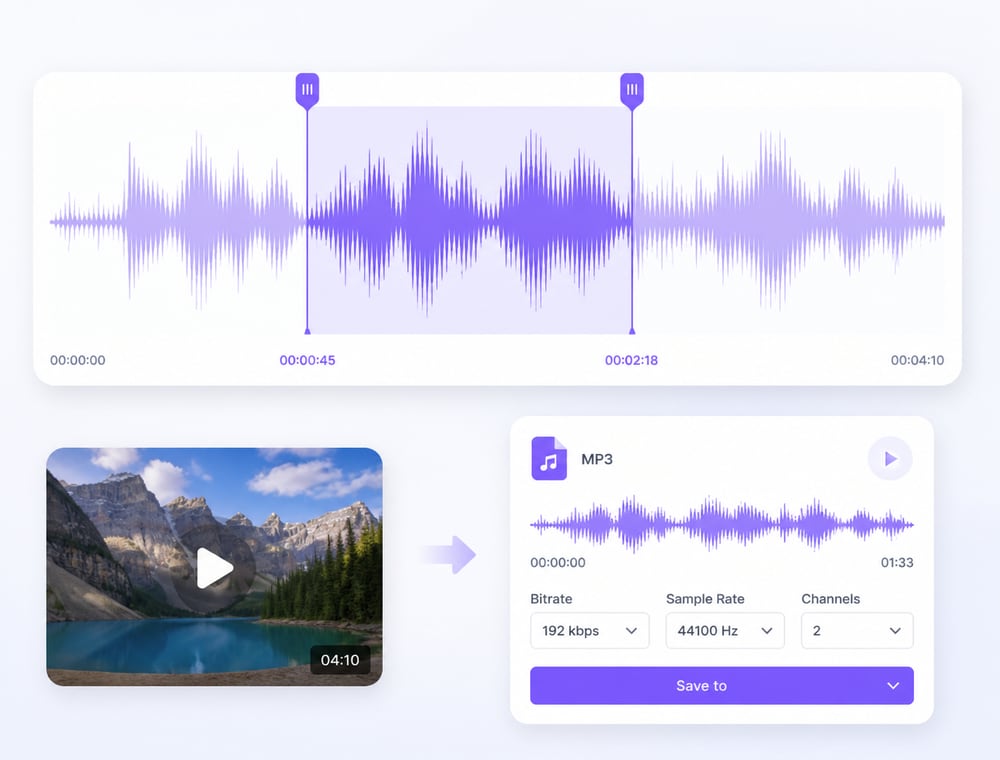
Trim long openings or review supported speech-oriented preparation on individual recordings where it improves access. The workflow remains pre-conversion preparation rather than a full audio-editing project.
Trim on a waveform timeline
Preview supported Audio and Speed changes
Apply shared changes only when suitable
Input support is broader than output support and can differ between
Windows, Mac, Online, and product versions.
Store the audio results beside a clearly retained video archive. Chapters, artwork, visual evidence, and container metadata should not be assumed to transfer automatically into the listening files.
Keep original source files available
Review representative outputs
Verify important fields in the receiving app
Avoid universal quality or metadata promises
Image Converter handles format conversion. These additional
operations
belong to Batch Image Editor.
Common AudioListening & WebLossless & StudioVideo Audio Sources
Explore current audio inputs, outputs, codecs, and quality options in theUniConverter Tech Specs.
How to Batch Extract Audio from Video
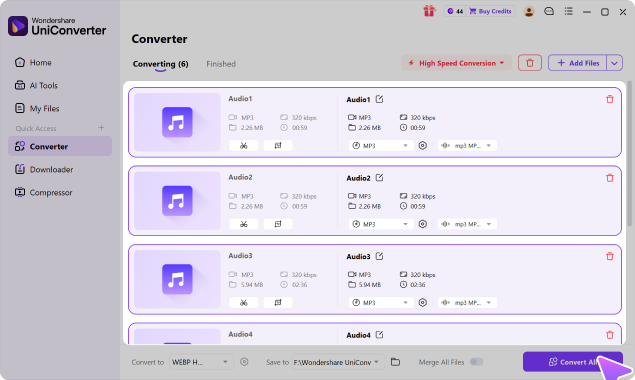
Choose recordings for an audio-first purpose, listen to a representative source track, and keep the video archive available before extracting the complete collection.
Use audio extraction when access, portability, or focused listening matters more than the picture, but the original recording still needs to remain available for context.
Turn Course Videos into Listening Material
Students and training teams can turn authorized lecture recordings into listening files for commuting, revision, or accessibility. The source videos remain available whenever slides, demonstrations, or other visual context are required.
Prepare Interviews and Meeting Archives
Researchers and journalists can create audio references from recorded interviews or meetings, making repeated listening easier while preserving the videos for identity checks, gestures, screen content, and source verification.
Build Audio Copies of Creator Recordings
Creators can prepare audio copies of tutorials, commentary, livestreams, or video essays for review and approved reuse. Rights and distribution decisions still apply independently of the extraction workflow.
Extract Reference Audio from Video Libraries
Media archivists can generate lightweight listening references for a video collection without discarding the visual masters. Clear naming connects every extracted file to the recording used for compliance, editing, and future delivery.
What UniConverter Users Are Saying
These reviews describe users' experience with Wondershare UniConverter as a broader conversion and editing product, rather than feedback specifically limited to the Batch Audio Converter. Review sources and publication dates are shown where available.
★★★★★
“Very configurable for the exact result you need.”
Its flexible conversion controls make it easier to prepare files for different output and delivery requirements.
Johnson
★★★★★
“The files can be used across IT platforms so easily!”
This kind of compatibility is useful when converted media needs to move between common systems and delivery workflows.
Williams
★★★★★
“Wondershare UniConverter is incredibly versatile.”
The broader conversion and editing toolkit supports users who need to complete more than one isolated media task.
Olivia
Explore UniConverter reviews and independent coverage across trusted software platforms.
Open Wondershare UniConverter Audio Converter, add the related video sources, choose an available audio profile, review representative files and the destination, then select Convert All.
02
When is Desktop better for video recordings and audio-only listening files?
Use Desktop when recording collections and audio-only access make the job recurring, folder-based, or easier to verify locally. Online remains useful for a small isolated file when upload and download stages are acceptable.
03
What should I check before creating audio for this workflow?
Review the output profile against recording collections and audio-only access. Available codec, bitrate, sample rate, bit depth, channel, and quality choices vary with the source, audio, platform, and installed version.
04
Can I trim or prepare a file before conversion?
A queued file can expose Trim plus supported Audio and Speed preparation. This is pre-conversion work inside Converter rather than a full multi-track editing, mixing, or mastering workspace.
05
Will metadata transfer from video to audio?
Do not assume it will. A source video container may hold fields, chapters, artwork, and visual context that do not map automatically to an audio-only result.
06
Does converting video to audio improve audio quality?
No. Creating an audio-only file cannot restore detail missing from the source video's audio track. Available output settings shape delivery rather than improving the original recording automatically.
Turn the Recording Collection into Organized Audio
Extract the recordings that deserve an audio-first version, test the listening files in their real destination, and keep the complete video archive available whenever the picture still matters.