
UniConverter
UniConverter Online Free
Converter video, audio & image free
Free Try
Wondershare UniConverter Image Converter

Batch Images to WebP Converter for Multiple Files

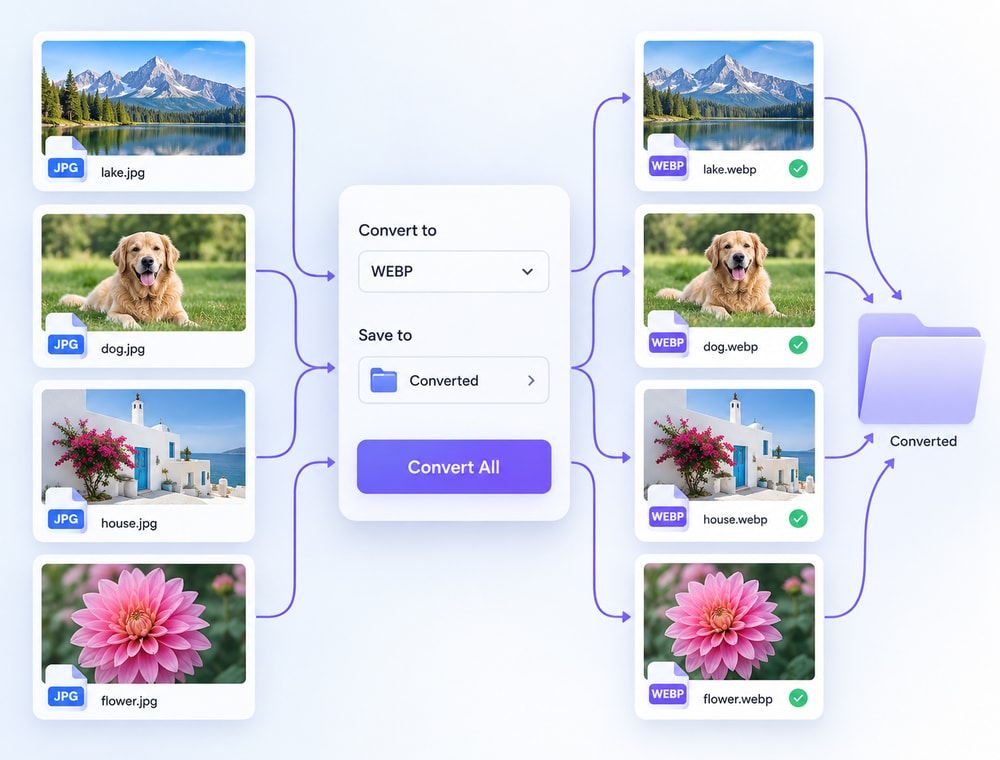
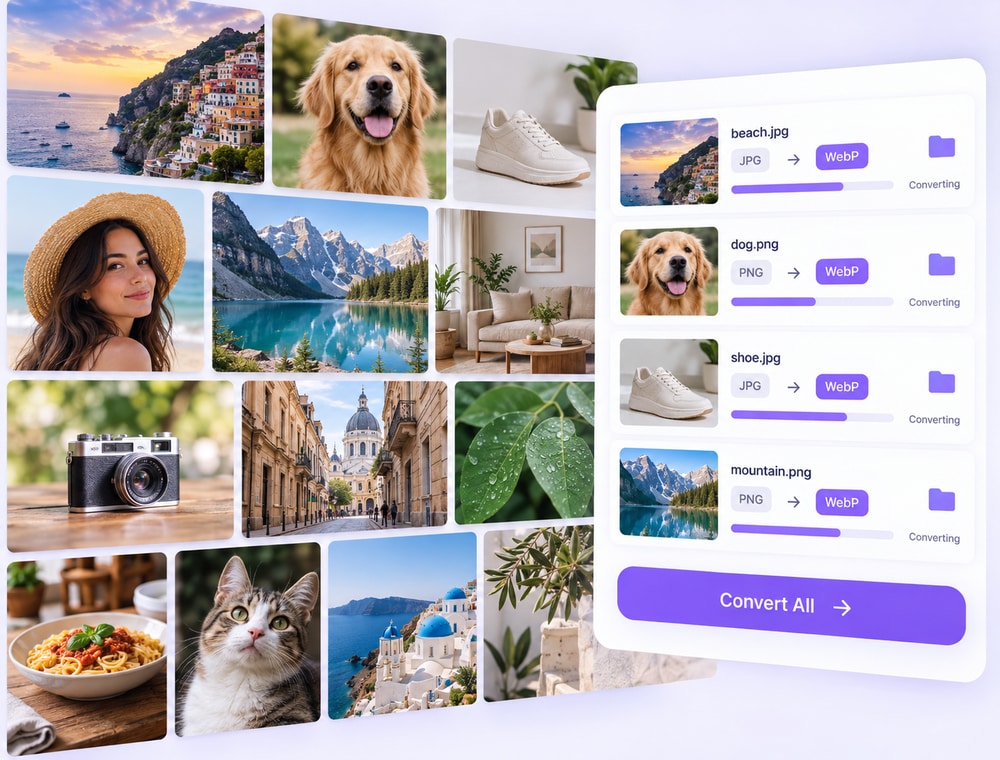
Batch convert multiple supported images to WebP with Wondershare UniConverter Desktop. Add image files or a folder, choose WebP as the shared output format, select a save location, and process the collection in one organized queue for websites, ecommerce catalogs, CMS libraries, and recurring publishing workflows.

  • Convert multiple supported image files or a folder to WebP in one desktop queue.
  • Apply one shared WebP output format and save location across the batch.
  • Review per-file options when selected images need different handling.
Available on:

For Windows 11/10/8/7

For macOS 10.13 or later, including macOS 26 Tahoe

4.7Rated on Trustpilot
Batch Images to WebP Converter for Multiple Files
120+Countries
7M+Satisfied Users
1.4M+Subscribers
21M+Downloads

Quick Answer: Can You Batch Convert Multiple Images to WebP?

Yes. In Wondershare UniConverter Desktop, add multiple supported images or a folder to Image Converter, choose WebP as the shared output format, select a Save to folder, and process the collection in one queue.

Why WebP? The WebP format supports lossy and lossless compression, transparency, and animation, and it is supported by major modern browsers. Actual file-size savings depend on the source image and conversion settings.

Desktop vs. Online for Batch Image Conversion

A browser converter can suit a small, occasional image task. UniConverter Desktop is designed for managed image collections that need local file handling, repeatable queue setup, and supported local acceleration.

Compare the workflow
Recommended for larger jobsUniConverter Desktop
Convenient browser accessOnline Batch Tools
Managed Image Collections
Organize supported mixed-image files or folders in one Desktop queue when the collection needs a repeatable conversion workflow.
A browser service requires the selected images to enter that provider's upload, processing, and download flow.
Upload & Download
Start with image folders already stored on your computer and export the converted collection directly to a chosen destination.
Total turnaround includes uploading the source images, waiting for server processing, and downloading the results.
Repeatable Batch Setup
Reuse the Desktop queue for recurring publishing, delivery, and image-library conversion batches.
Queue size, per-job limits, retained settings, and repeat-job convenience vary by service and plan.
Local Acceleration
Use Ultra-fast Speed and available GPU acceleration for supported image conversion when compatible local hardware is detected.
Browser processing depends on connection speed, server load, and the provider's current processing conditions.
Simple decision:
Choose Desktop when image conversion is part of a recurring collection workflow rather than a one-time browser task.
Download UniConverter for Desktop

Why Use Wondershare UniConverter for Batch Image-to-WebP Work?

Wondershare UniConverter Image Converter is a desktop workflow for publishers, ecommerce teams, designers, photographers, and asset coordinators who need WebP copies from multiple supported images. Add files or a folder to one queue, establish shared output and destination settings, handle available per-file exceptions, and process the collection on a supported Windows or Mac setup.

Turn a Supported Folder into a WebP Delivery Set

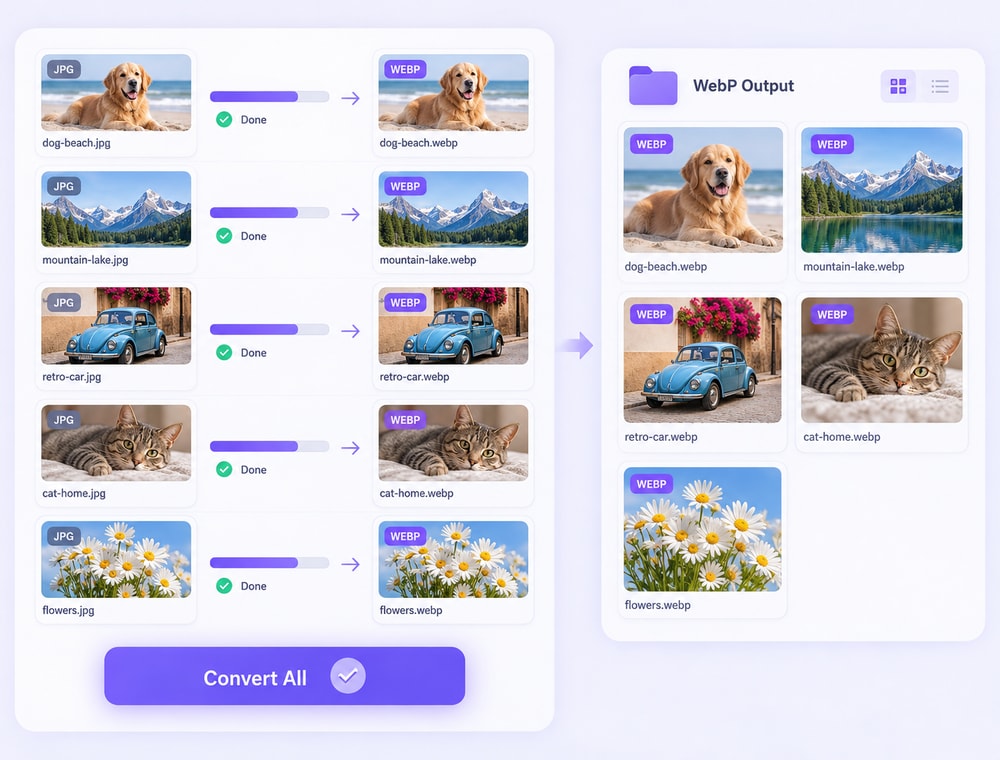
Convert a folder of supported images to WebP instead of repeating the same format-selection task file by file. This is useful when a CMS, website, marketplace, or publishing workflow needs a consistent WebP delivery set.

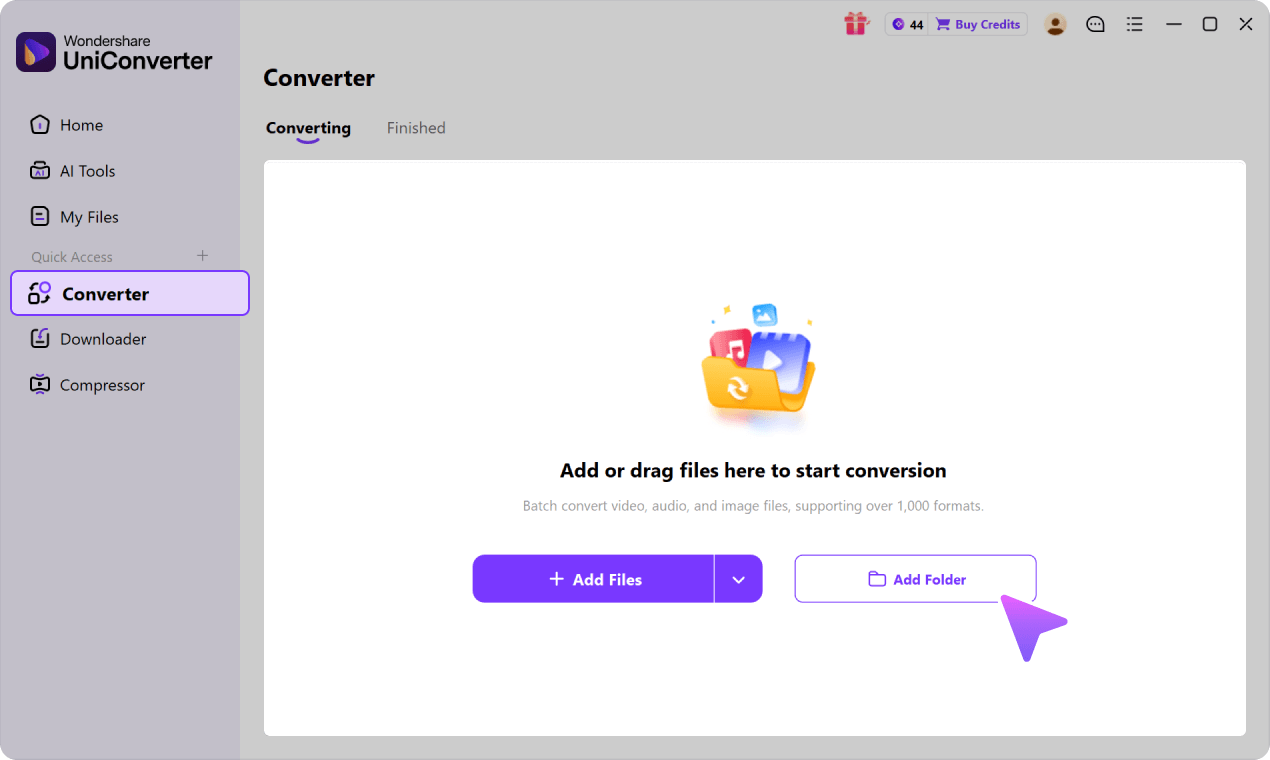
  • Add supported image files or a folder to the Image Converter queue.
  • Review the detected collection before starting the conversion.
  • Retain the original folder for future edits, archives, or alternate formats.
Turn a Supported Folder into a WebP Delivery Set

Set the WebP Destination Once

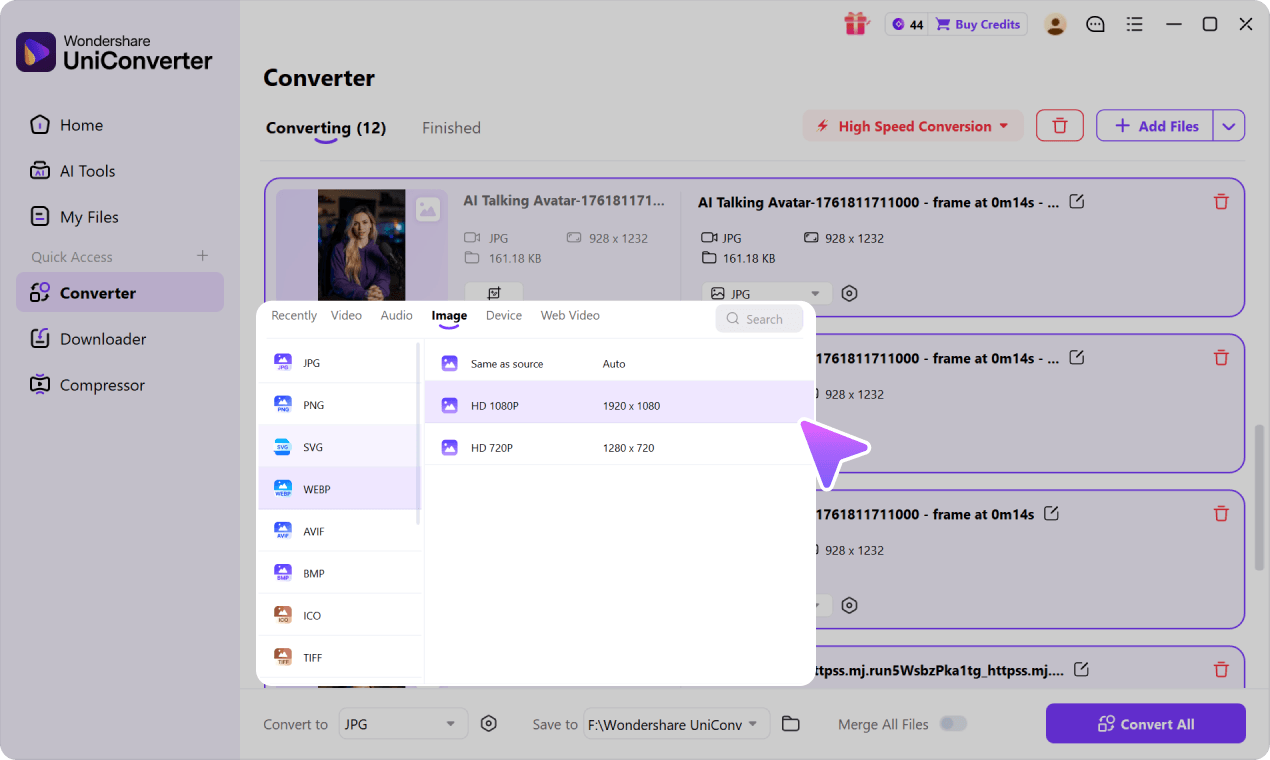
Choose WebP once with the shared Convert to control, then select one Save to folder for the collection. This keeps recurring publishing batches organized and separates delivery copies from the original assets.

  • Choose WebP through the shared Convert to control where supported.
  • Select a Save to folder for the converted copies.
  • Keep delivery files separate from original working assets when practical.
Set the WebP Destination Once

Handle Individual Queue Exceptions

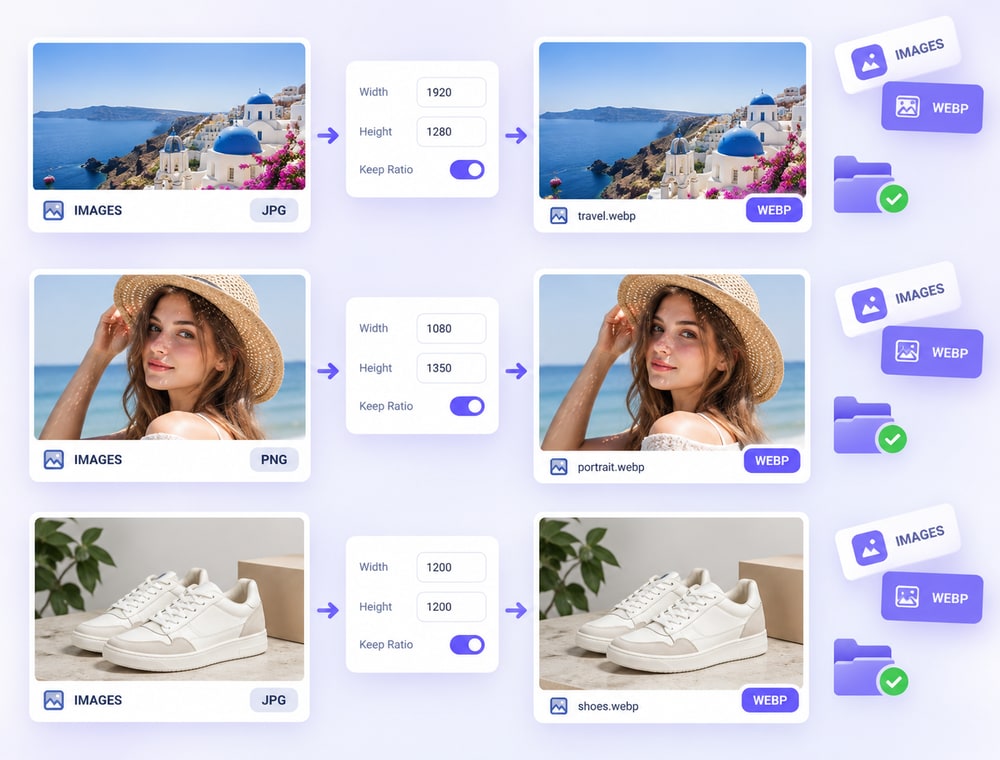
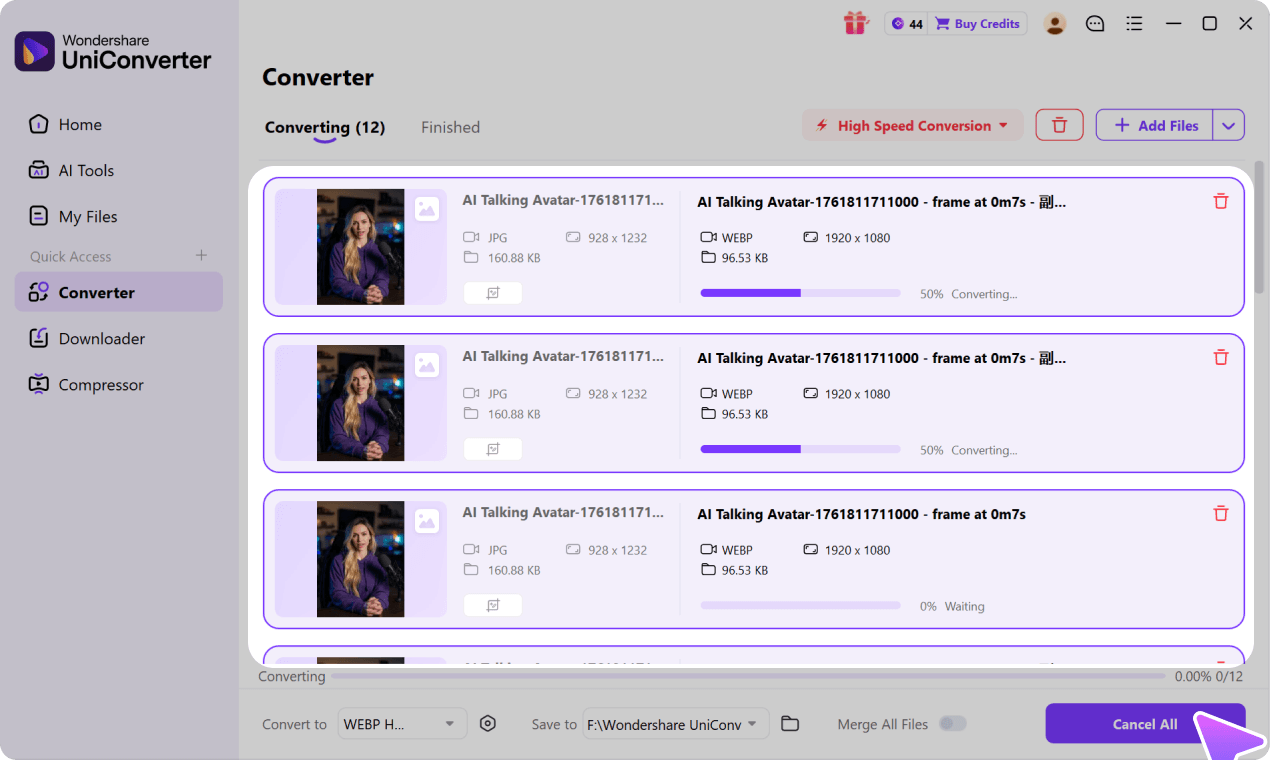
A shared WebP output keeps the batch consistent, while available per-file settings let you review individual images that need different handling before conversion.

  • Use an individual output-format selection for an exception.
  • Check available per-image size settings before processing.
  • Confirm that the selected source and destination support the intended choice.

Input and output availability can vary by operating system and UniConverter version.

Handle Individual Queue Exceptions

Prepare WebP Files for Modern Web Delivery

WebP is designed for web image delivery and supports lossy and lossless compression, alpha transparency, and animation at the format level. Use it when your publishing platform accepts WebP and you want a modern delivery format for photos, graphics, and web assets.

  • Use WebP for supported website, CMS, ecommerce, and asset-library workflows.
  • Keep original JPG, PNG, RAW, or design files when they remain important for editing or archiving.
  • Check transparency, animation, dimensions, and visual quality when those properties matter.
  • Use Batch Image Editor or Batch Image Enhancer separately when the job requires broader editing or AI enhancement.
Prepare WebP files for modern web delivery

WebP Format Facts for Batch Image Conversion

Wondershare UniConverter Image Converter supports WebP as an image output format and can process supported image collections from one desktop queue. Use a shared WebP output and destination for the batch, then review available per-file size or output options when an image needs different handling. For WebP-specific publishing, check the converted results when transparency, animation, exact dimensions, or file-size targets are important.

What WebP Supports

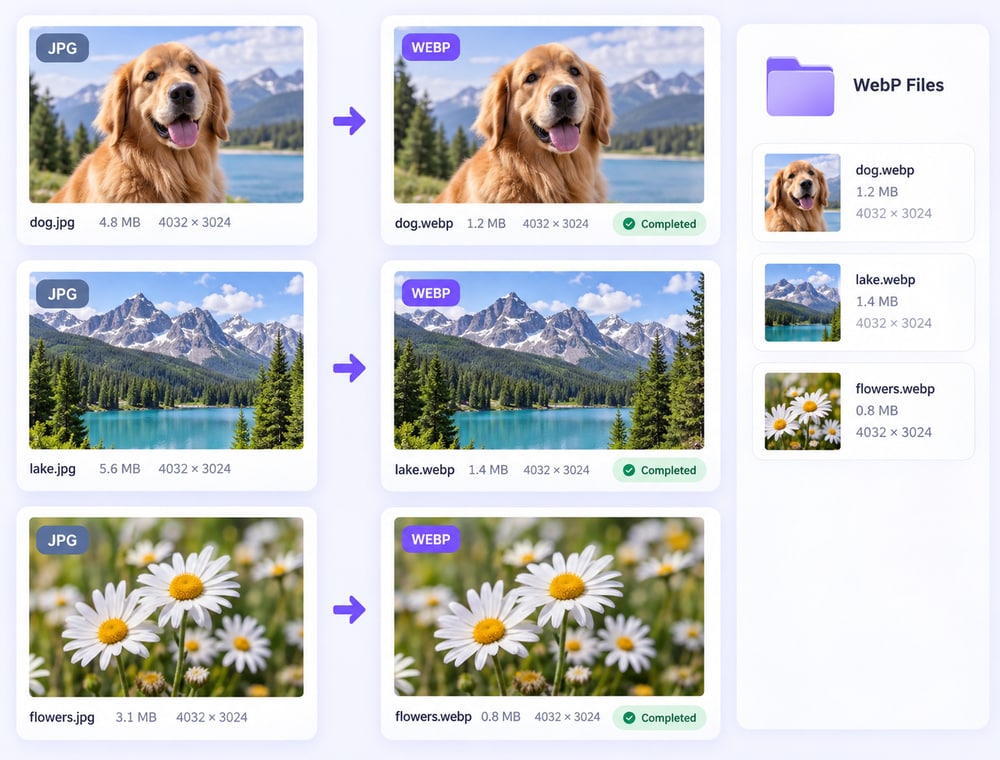
Google describes WebP as an image format that supports lossy and lossless compression, transparency, and animation. In Google's published WebP studies, lossless WebP images were 26% smaller than PNG and lossy WebP images were 25-34% smaller than comparable JPEG images at equivalent SSIM quality; real-world results vary by image and settings.

WebP format facts for batch image conversion
Format factSource collectionWebP output
CompressionVaries by source formatSupports lossy and lossless compression
TransparencyDepends on the source assetWebP supports alpha transparency
AnimationMay be static or animatedWebP supports animation; verify the conversion result when animation must be preserved
Browser supportDepends on the original formatSupported by current Chrome, Edge, Firefox, and Safari versions listed in Google's WebP FAQ

Technical references: Google WebP overview and Google WebP FAQ.

Common ImagesModern & WebCamera RAWDesign & Pro

Format availability may vary by operating system and UniConverter version. See the UniConverter Tech Specs for current image format support and system requirements.

When to
Batch Convert Images to WebP

Batch conversion is useful when a website, store, CMS, gallery, or campaign needs many supported source images standardized as WebP delivery files while the original assets remain available for editing or archival use.

Website and CMS Publishers

Create WebP copies from a supported local asset folder before uploading or assigning images in a content system. Check that the destination accepts WebP and retain the original files for future revisions.

Ecommerce Teams

Prepare product-photo collections or catalog graphics as WebP delivery files. Use a consistent destination folder and review representative products for visual quality, dimensions, and marketplace or storefront compatibility.

Design and Marketing Teams

Standardize exported campaign visuals or mixed supported image assets for web handoff. Treat WebP as a delivery copy and preserve the source exports for later campaign changes.

Photographers and Content Coordinators

Create WebP copies from a supported photo collection for online galleries, previews, or publishing workflows. This conversion does not replace RAW development, image enhancement, or archival storage.

What UniConverter Users Are Saying

These reviews describe users' experience with Wondershare UniConverter as a broader conversion and editing product, rather than feedback specifically limited to the Batch Image Converter. Review sources and publication dates are shown where available.

★★★★★

“Very configurable for the exact result you need.”

Its flexible conversion controls make it easier to prepare files for different output and delivery requirements.
JohnsonJohnson
★★★★★

“The files can be used across IT platforms so easily!”

This kind of compatibility is useful when converted media needs to move between common systems and delivery workflows.
WilliamsWilliams
★★★★★

“Wondershare UniConverter is incredibly versatile.”

The broader conversion and editing toolkit supports users who need to complete more than one isolated media task.
OliviaOlivia

Explore UniConverter reviews and independent coverage across trusted software platforms.

FAQs About Batch Converting Images to WebP

01

What is a batch images-to-WebP converter?

A batch images-to-WebP converter changes multiple supported image files to WebP in one queue. In UniConverter Desktop, you can add files or a folder, choose WebP as the shared output format, select a save location, and process the collection together.
Yes. UniConverter Desktop Image Converter supports batch image conversion, so you can add multiple supported images or a supported folder, select WebP as the output, choose the destination folder, and process the queue in one workflow.
UniConverter supports many image input formats, including common, camera RAW, and design-oriented formats, while WebP is listed as an image output format in the current Tech Specs. Exact availability can differ by operating system and product version, so confirm the current format list for production jobs.
WebP is designed for web image delivery and supports lossy and lossless compression, transparency, and animation. Batch conversion is useful when a website, ecommerce store, CMS, or campaign needs a consistent WebP delivery set from many source images.
No. Google's published WebP studies report smaller files than comparable JPEG or PNG images under specific test conditions, but real output size depends on the source image, dimensions, compression mode, quality settings, and conversion path. Check representative files before publishing a full batch.
Yes at the format level. WebP supports alpha transparency and animation. When converting existing assets, verify the exported file if preserving transparency, animation, metadata, or another source-specific property is required for the destination workflow.
Yes. Google's WebP documentation lists native WebP support in current Chrome, Edge, Firefox, Opera, and Safari versions. For controlled enterprise or legacy environments, check the browsers and systems used by your actual audience.
Wondershare UniConverter

Batch Convert Images to WebP in One Desktop Workflow

Add supported images or a folder, choose WebP as the shared output format, select a save location, and process the collection in one desktop queue. Review representative output files before publishing or replacing the originals.

Create WebP Copies from Supported Image Collections