UniConverter
UniConverter Online Free
Converter video, audio & image free
Free Try
Wondershare UniConverter Image Converter

Batch Compress Multiple Images on Desktop

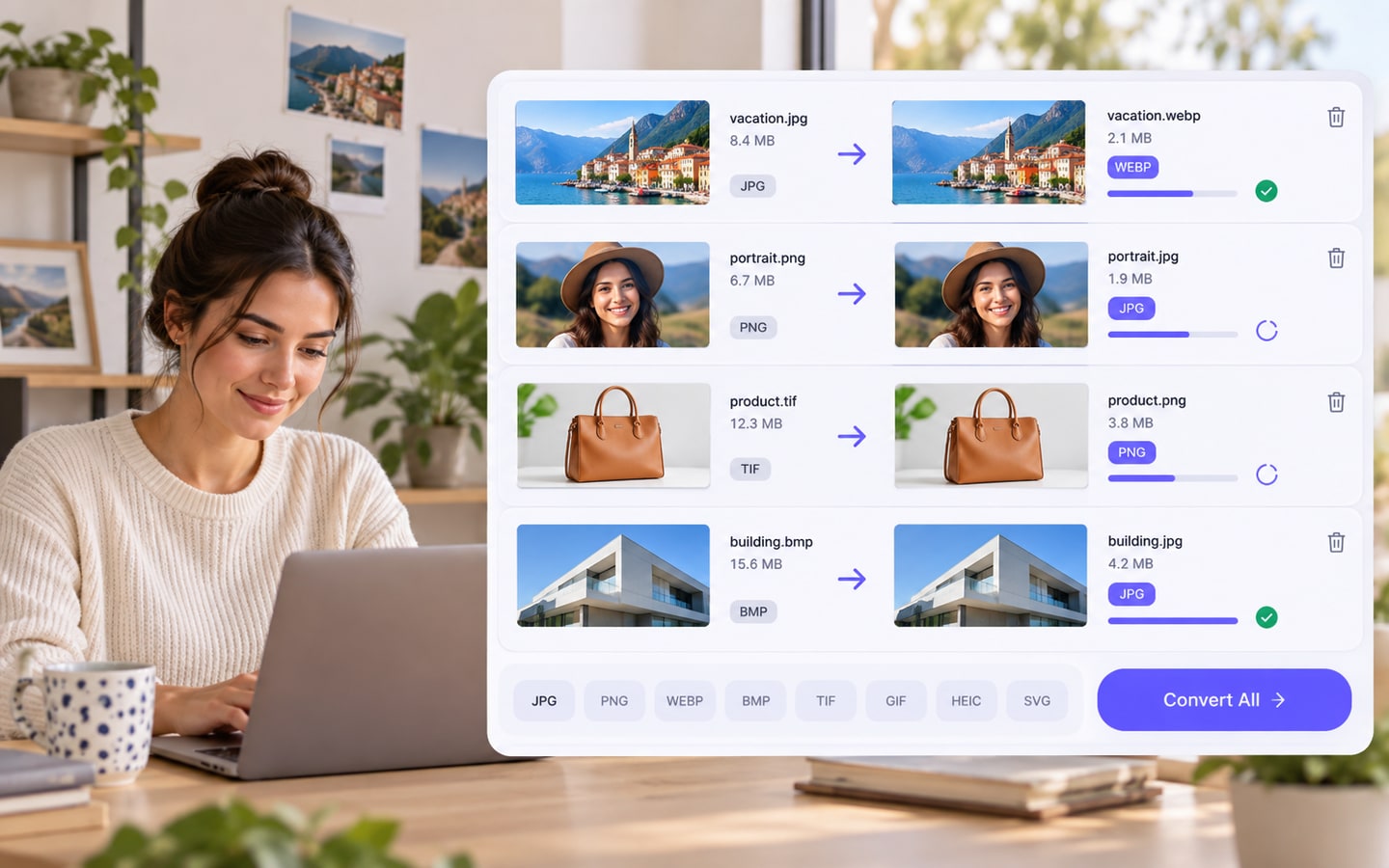
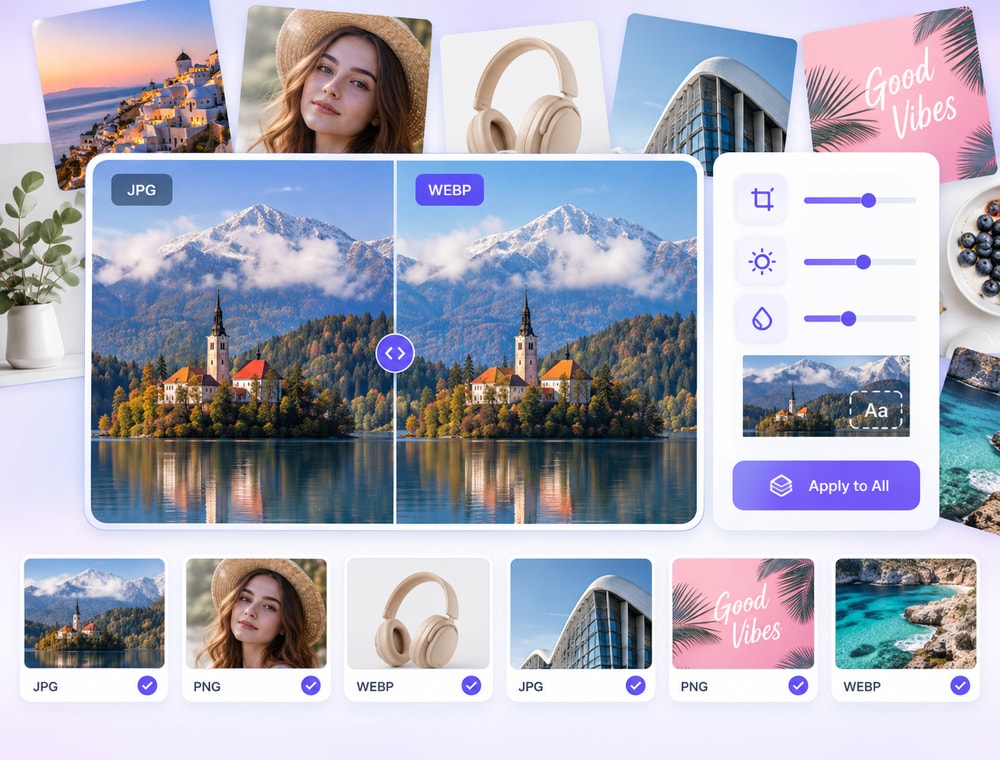
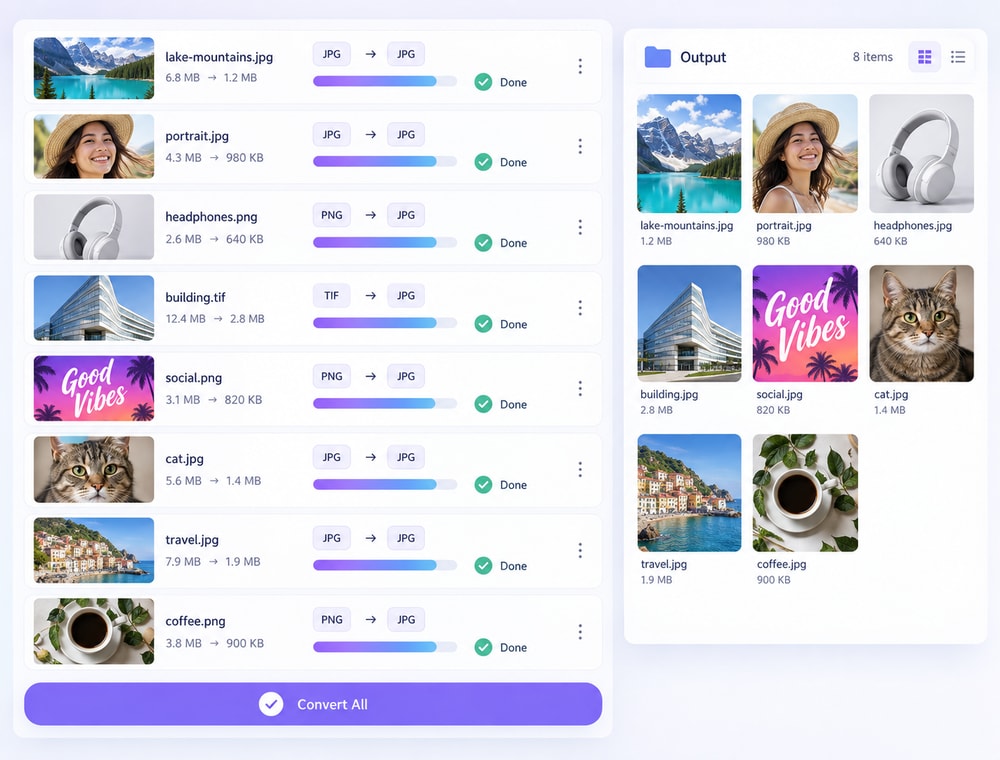
Use Wondershare UniConverter Desktop to batch compress supported images in one organized queue. Add local files or folders, choose a shared output format and destination, then reduce dimensions or adjust JPG quality where available. Keep the originals and review representative results before publishing, sharing, or delivery.

  • Add multiple supported images or folders to one desktop queue.
  • Set shared Convert to and Save to controls for the whole batch.
  • Adjust dimensions and review JPG quality controls where available.
Available on:

For Windows 11/10/8/7

For macOS 10.13 or later, including macOS 26 Tahoe

4.7Rated on Trustpilot
Batch Compress Multiple Images on Desktop
120+Countries
7M+Satisfied Users
1.4M+Subscribers
21M+Downloads

Desktop vs. Online for Batch Image Compression

A browser compressor can suit a quick, occasional image task. UniConverter Desktop is better suited to recurring local image collections that need one organized queue, shared output controls, per-file exceptions, and a chosen destination folder.

Compare the workflow
Recommended for larger jobsUniConverter Desktop
Convenient browser accessOnline Batch Tools
Managed Image Collections
Organize supported mixed-image files or folders in one Desktop queue when the collection needs a repeatable conversion workflow.
Browser tools vary: some process images locally, while others upload files for remote processing. Batch limits and available controls depend on the service.
Upload & Download
Start with image folders already stored on your computer and export the converted collection directly to a chosen destination.
Browser workflows vary by service and may include local processing or upload, processing, and download stages.
Repeatable Batch Setup
Reuse the Desktop queue for recurring publishing, delivery, and image-library conversion batches.
Queue size, per-job limits, retained settings, and repeat-job convenience vary by service and plan.
Local Acceleration
Work with local image files and save the processed collection directly to a selected desktop folder.
Browser performance and file handling depend on the service, device, connection, and whether processing is local or cloud-based.
Simple decision:
Choose Desktop when batch image compression is part of a recurring local workflow rather than a one-time browser task.
Download UniConverter for Desktop

Why Use UniConverter to Batch Compress Images?

Wondershare UniConverter uses its desktop Image Converter workflow to organize supported local images in one queue and prepare smaller output copies for websites, ecommerce, sharing, delivery, or storage. Apply one shared output setup to the batch, then review available per-file settings when individual images need different handling.

Compress Multiple Images in One Organized Queue

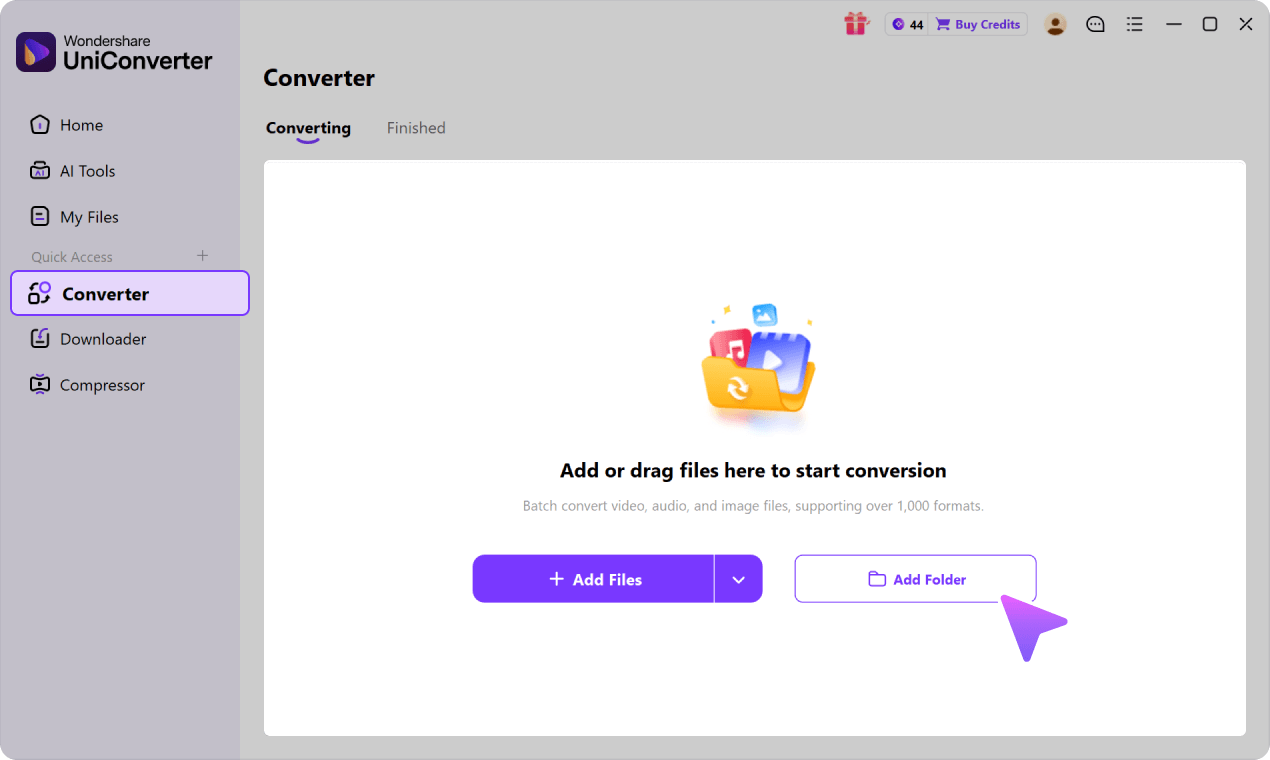
Add multiple supported images or a supported folder to the desktop Image Converter queue, then review the collection before processing the batch.

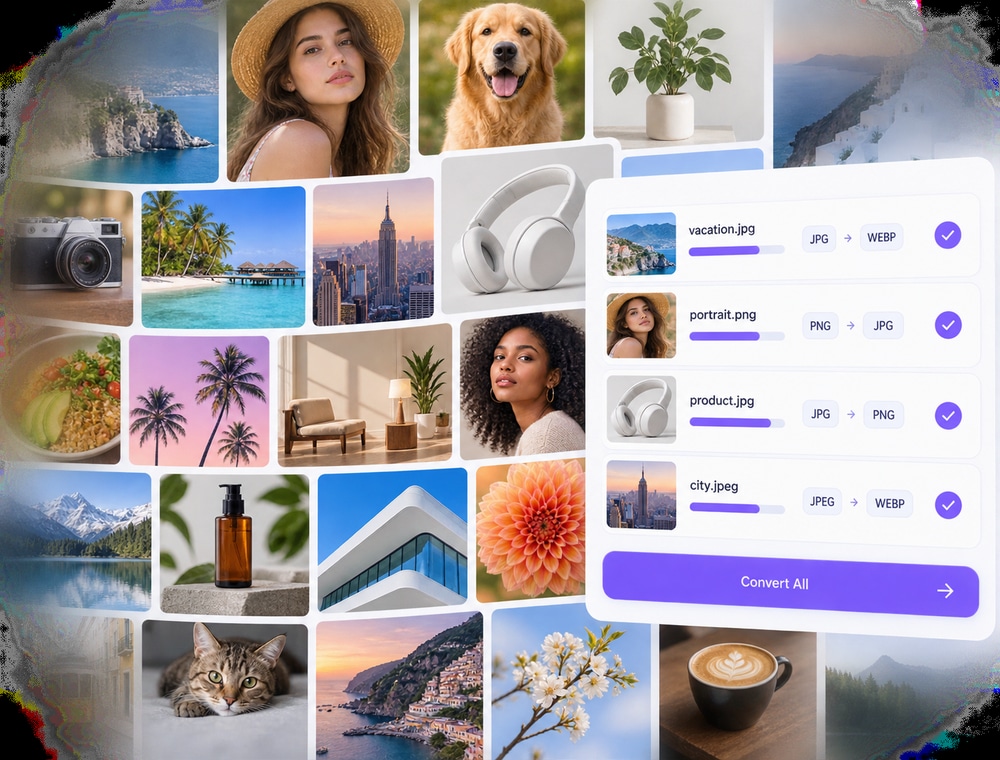
  • Prepare product, editorial, marketing, or personal image collections together.
  • Apply shared output settings without repeating the full setup for every image.
  • Keep the source collection separate while creating smaller delivery copies.
Compress Multiple Images in One Organized Queue

Set Shared Output Controls, Then Handle Exceptions

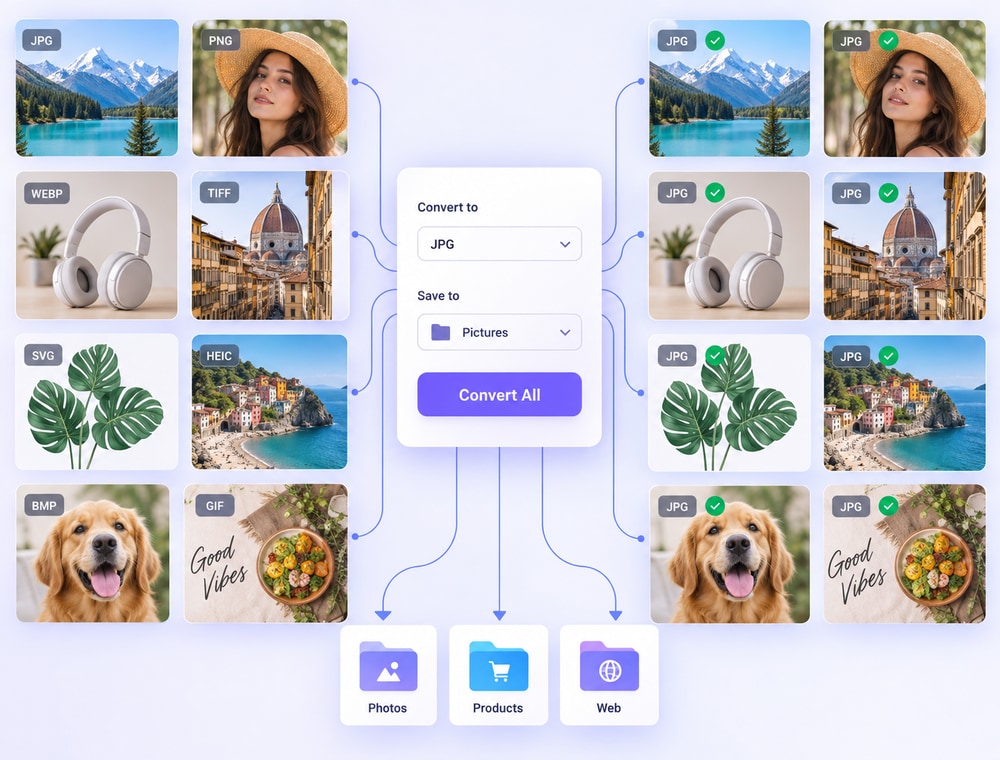
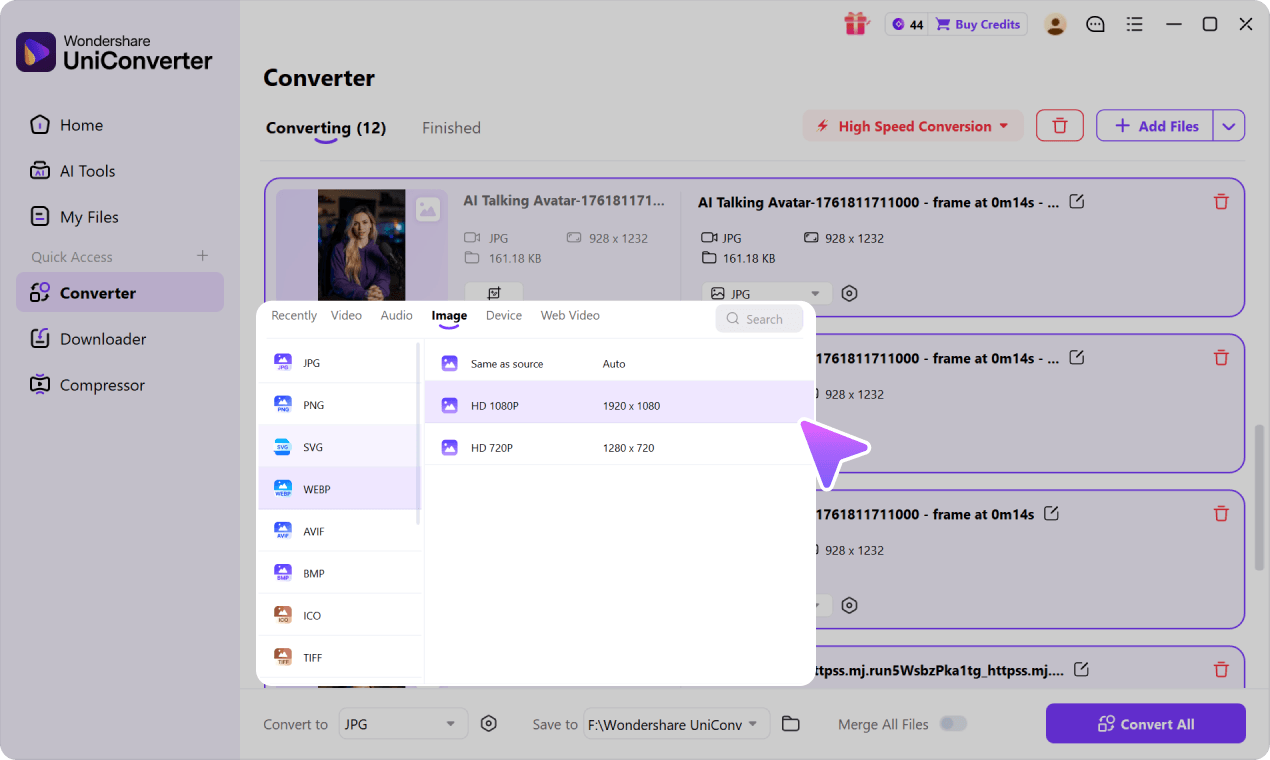
Use the shared Convert to and Save to controls for the whole queue, then review available per-file output choices when individual images need different treatment.

  • Choose an available output format that fits the destination requirements.
  • Select one destination folder for the processed image set.
  • Use per-file output choices when an individual image needs a different setting.
Set Shared Output Controls, Then Handle Exceptions

Reduce Image Size with Dimensions and JPG Quality

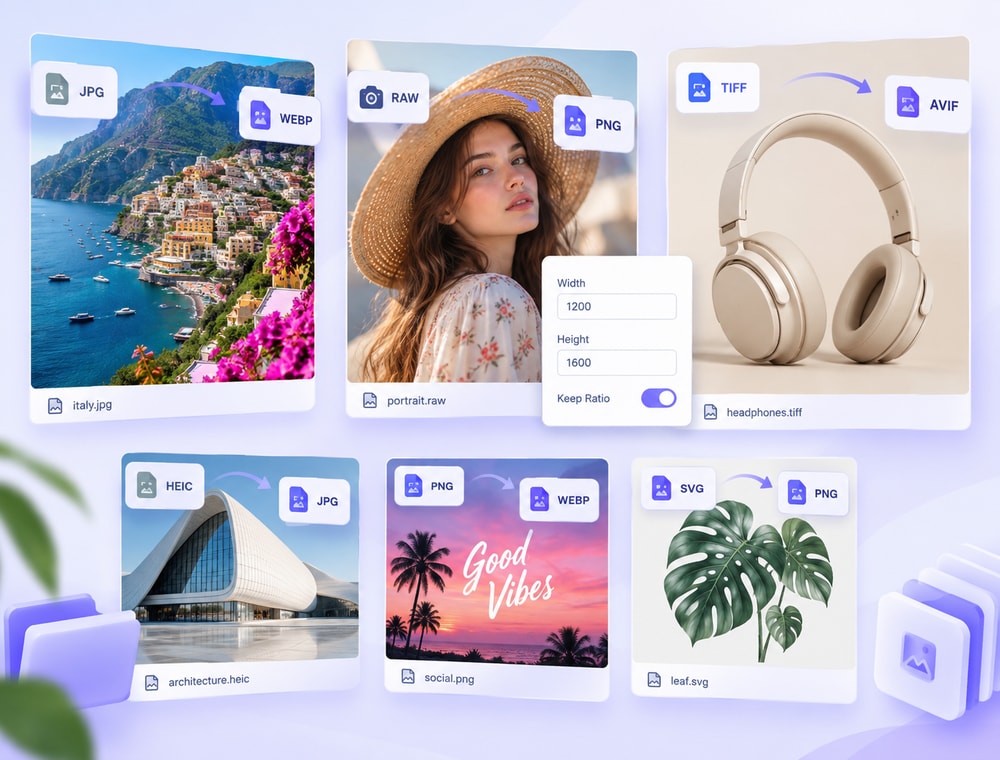
Quality Setting can include Keep original size, custom pixel dimensions, Keep aspect ratio, and a JPG quality adjustment. Use these controls to reduce file size while checking the resulting dimensions and appearance.

  • Keep the original pixel dimensions when resizing is not needed.
  • Enter smaller custom pixel dimensions and keep the aspect ratio when the destination allows it.
  • Adjust JPG quality when JPG is the selected output; do not assume the same quality control applies to PNG, WebP, or every format.

Input and output availability can differ by operating system, product version, source format, and selected output.

Reduce Image Size with Dimensions and JPG Quality

Review Smaller Copies Before Replacing Originals

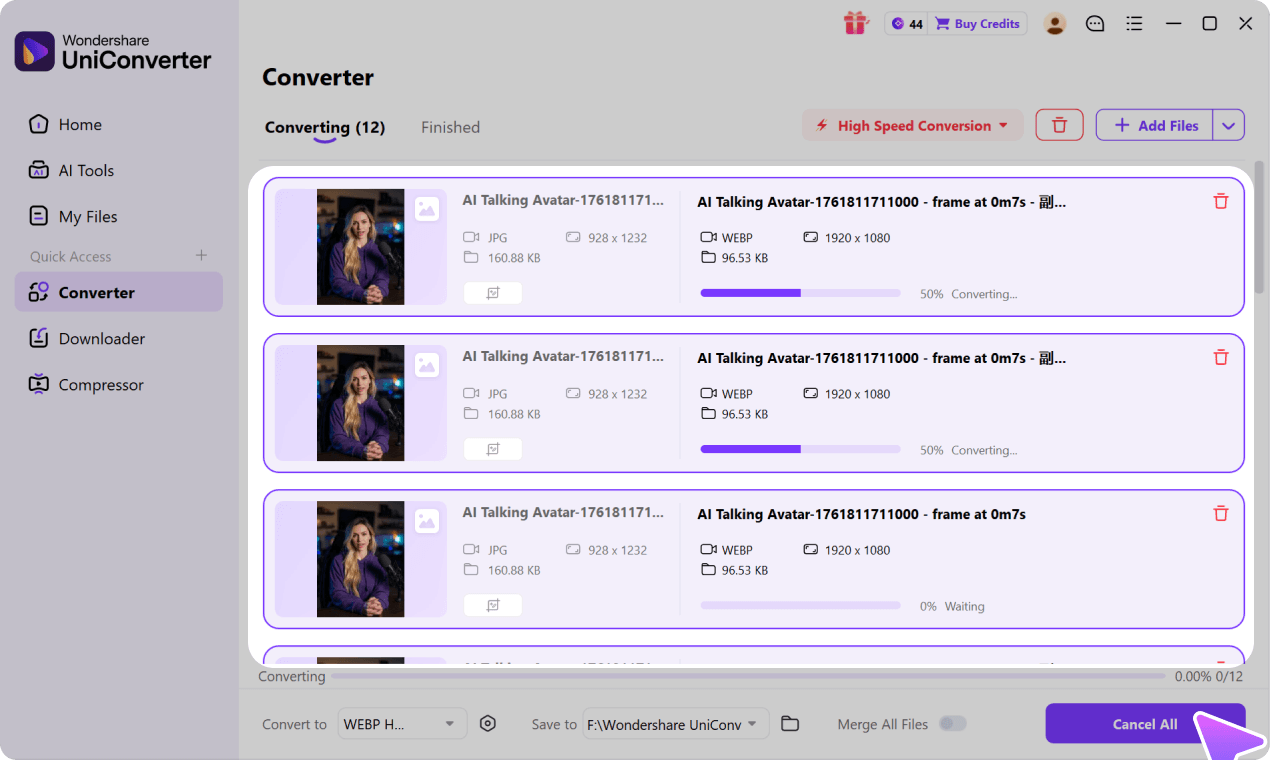
Save processed results to a selected folder so you can compare file size, dimensions, and visual quality before publishing, sharing, or replacing any source files.

  • Create a separate output set for website, ecommerce, delivery, sharing, or storage tasks.
  • Compare representative source and output images before using the full batch.
  • Retain higher-quality originals because smaller copies may use different dimensions, formats, or JPG quality settings.
  • Use Batch Image Editor separately when you need dedicated resizing, background work, or broader image editing.

Image Converter handles format conversion and output-size preparation. Dedicated batch resizing, background work, and broader editing belong to Batch Image Editor.

Review Smaller Copies Before Replacing Originals

What You Can Control in a Batch Image Compression Workflow

UniConverter Desktop lets you choose a shared output format with Convert to and a destination folder with Save to for the queue. Individual images can also use available per-file output choices, custom pixel dimensions, Keep original size, Keep aspect ratio, and JPG quality settings. JPG quality adjustment is verified for JPG output and should not be treated as a universal PNG or WebP control. File-size results depend on the source image and selected settings, so review processed copies instead of expecting an identical reduction or exact target size for every image. Image Converter can adjust output dimensions during conversion; for dedicated batch resizing, background work, and broader editing, use Batch Image Editor.

Batch Compression Controls at a Glance

Choose the control that best matches the reason you need smaller image files.

Key differences between the source and output image formats
Compression goalRecommended controlImportant condition
Image is larger in pixels than neededCustom pixel dimensionsKeep aspect ratio when you want to avoid distortion.
JPG is correctly sized but still too largeJPG quality adjustmentQuality adjustment is verified for JPG output, not every format.
Destination accepts another image formatChoose a supported output formatCheck destination compatibility before converting the full batch.
Website requires an exact KB limitProcess, then verify the resultAn exact target such as 100 KB or 200 KB is not guaranteed.

Technical references: UniConverter Tech Specs and UniConverter Image Converter.

Common ImagesModern & WebCamera RAWDesign & Pro

Format availability may vary by operating system and UniConverter version. See the UniConverter Tech Specs for current image format support and system requirements.

Practical uses for
batch image compression

Batch image compression is useful when a local collection needs smaller copies for a website, store, client handoff, sharing, or storage. Choose output format, dimensions, and JPG quality based on the destination requirements.

Website and CMS Preparation

Create lighter copies of supported product, editorial, or marketing images before uploading them to a website or content management system. Check the CMS file rules, dimensions, format support, and visible quality before publishing.

Ecommerce Catalog Delivery

Prepare a consistent collection of product-image copies for a store, marketplace, supplier handoff, or catalog workflow. Confirm accepted formats, dimension rules, transparency requirements, and quality expectations first.

Photo Sharing and Client Handoff

Create smaller copies of a photo selection for email, messaging, review, or client delivery. Keep the original photos separately because reducing dimensions or using JPG output can affect detail.

Create Smaller Access Copies for Storage

Create lighter access copies of a supported image collection while keeping higher-quality originals for future editing or preservation. Actual storage savings vary by source and output settings.

What UniConverter Users Are Saying

These reviews describe users' experience with Wondershare UniConverter as a broader conversion and editing product, rather than feedback specifically limited to the Batch Image Converter. Review sources and publication dates are shown where available.

★★★★★

“Very configurable for the exact result you need.”

Its flexible conversion controls make it easier to prepare files for different output and delivery requirements.
JohnsonJohnson
★★★★★

“The files can be used across IT platforms so easily!”

This kind of compatibility is useful when converted media needs to move between common systems and delivery workflows.
WilliamsWilliams
★★★★★

“Wondershare UniConverter is incredibly versatile.”

The broader conversion and editing toolkit supports users who need to complete more than one isolated media task.
OliviaOlivia

Explore UniConverter reviews and independent coverage across trusted software platforms.

Batch Image Compressor FAQs

01

How can I batch compress multiple images in UniConverter?

Open Wondershare UniConverter's desktop Image Converter, add supported image files or a supported folder, and organize the queue. Choose an available output format and Save to folder, then review available per-image dimensions, Keep aspect ratio, and JPG quality controls before processing. Open the saved output set and check the results because file size and visual quality depend on the source images and selected settings.
Yes. You can add a supported folder to the Image Converter queue. Review the imported files before processing because unsupported files or folder contents may not be added to the queue.
No. Different images can produce different output sizes because file size depends on image content, source dimensions, selected output format, output dimensions, and JPG quality settings where available.
Not always. Reducing pixel dimensions or lowering JPG quality can remove detail. Keep the original collection separately and review representative output files before publishing or sharing them.
UniConverter supports multiple image formats, but available input and output combinations vary by operating system, version, source format, and selected destination. Check the formats available in the current Image Converter workflow before processing a mixed collection.
No exact target size is guaranteed. You can reduce dimensions or adjust JPG quality where available, then check the resulting file size after processing. If a website requires an exact limit such as 200 KB, verify each result before upload.
Wondershare UniConverter

Create Smaller Image Copies from One Desktop Queue

Use Wondershare UniConverter Image Converter to organize supported images, choose an output format and destination folder, and reduce dimensions or adjust JPG quality where available. Keep the originals and review processed copies before delivery.

Prepare smaller image copies from one desktop queue